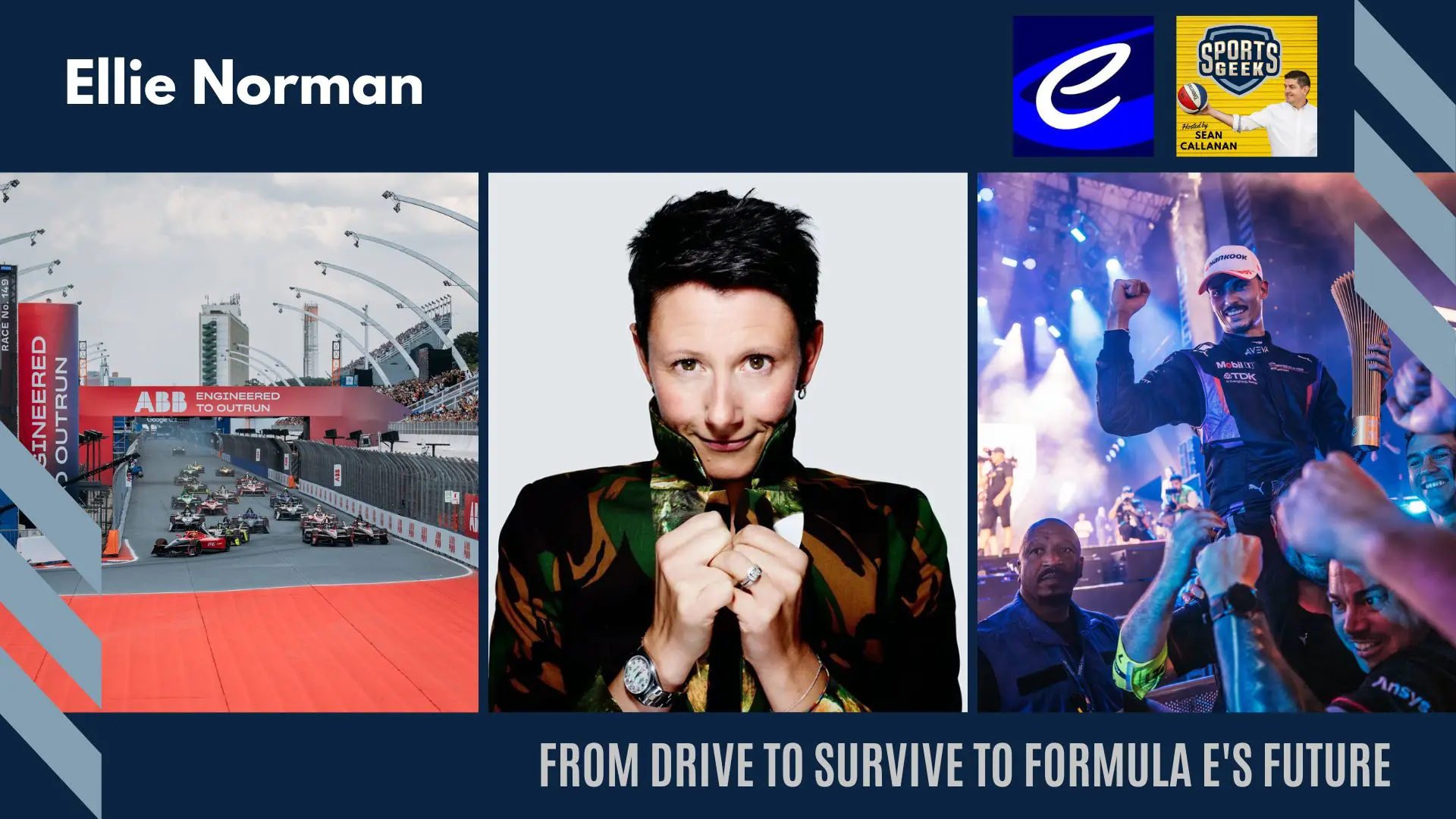
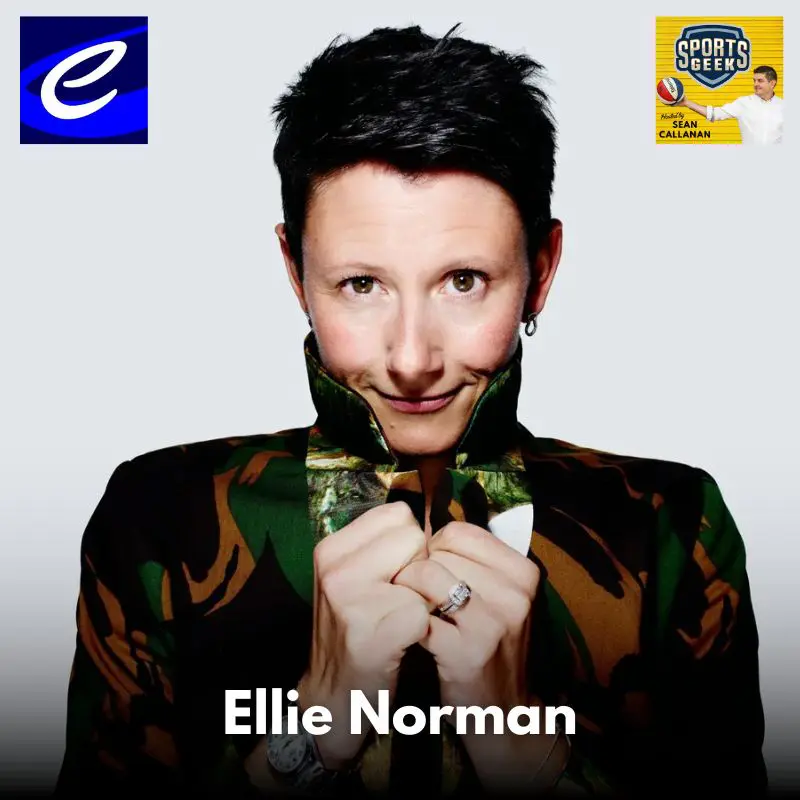
In episode 453 of Sports Geek, Ellie Norman brings a remarkable breadth of global sports marketing experience from automotive and telco, with stints at Formula 1, Manchester United, and now as Chief Marketing Officer of Formula E.
In this conversation, you’ll discover:
- How to think about sponsorship as a medium-to-long-term investment and why aligning on success metrics upfront is the one step that prevents every sponsorship relationship from unravelling
- The inside story of Drive to Survive: why Formula 1 chose Netflix, why they handed over editorial control, and what the early green shoots of audience change actually looked like
- Why Ellie's guiding principle — take motorsport outside the echo chamber — applies to any sport with a niche audience that needs to build broader cultural relevance
- How Formula E positions itself as the evolution of motorsport (not the electric version of F1), and why its $15M cost cap vs F1's $250M creates a compelling case for manufacturer partners
- The 70/20/10 budget framework Ellie uses to balance proven strategies, optimisation, and genuine experimentation and how automation and AI are helping free up human capacity for the 10%
- Why data and storytelling must work together: how Formula E is using car and driver data, partnered with Google Cloud, to create personalised, participatory fan experiences including AI-generated race commentary
- What the fan of today actually wants from live sport and why Gen Z and millennial audiences are driving the return of live events as part of a broader entertainment mix that blends sport, music, gaming and technology
Listen to Ellie Norman on Sports Geek
Can't see podcast player? Click here to listen
Watch on YouTube
Interview Transcript
This transcript has been transcribed by Riverside.fm, no edits (please excuse any errors)
Sean Callanan (00:01.5)
Very happy to welcome Ellie Norman. She's the Chief Marketing Officer at Formula E. Ellie, welcome to the podcast.
Ellie Norman (00:08.95)
Sean, thank you very much, it's great to be with you.
Sean Callanan (00:12.398)
I appreciate it very much. I always try to dive into people's sports business origin story and how they got into the world of sport. What about yourself? How did you find yourself? What was your first gig in the world of sport?
Ellie Norman (00:24.142)
Mmm.
I think in truth, you… I was going to say, I think in truth, the obvious one would be to say 2017 working for Formula One. However…
Sean Callanan (00:27.538)
And we're allowed to go a long way back, so, you know, just…
Ellie Norman (00:40.622)
In truth, I would go way back to when I worked for Honda. So I worked on the automotive side of the business, but I worked for Honda between 2005 and 2012. And for those of you that have been a fan of Formula One for a long time, Honda had a Formula One team back then. So that would be my first foray into sports, which was working with
Jensen Button when he was driving and Ruben's Barrichello.
Sean Callanan (01:17.06)
And so you were, I was looking over your of your back catalogue, if I will, or your career, and you were in that role, and then you went to Virgin Media, and that was where you sort of really, I guess, stretched that marketing and advertising and sponsorship muscle.
Ellie Norman (01:33.071)
100 % yeah. Having moved from automotive, moved into completely new sector. So Media Entertainment Telco bought sponsorship so that definitely gave me some great schooling in terms of what do clients look for when buying sponsorship.
and so I did that and also did the advertising for Virgin Media and that was my sort of my last corporate gig before switching into the world of sport.
Sean Callanan (02:09.532)
But again, it would have been a really good grounding in that space if it was still relatively early digital, advertising was changing so much, sponsorship was moving from logos on things that move or things that are static to what does digital look like. So guess having that coming from the telco and Virgin Media being a big business, you would have got, I guess, a lot of insight from that rights holder point of view.
Ellie Norman (02:17.496)
Thank
Ellie Norman (02:33.294)
It was absolutely, I think my sort of foundation of having worked agency side for five years, seven years in sort of automotive and then the five years in sort of media and entertainment gave me just a fantastic kind of basis to understand the number one, the theory of marketing and driving kind of growth and value for an organization. And two,
17 years experience of actually getting in and doing it. So really sort of thinking about what the cost per acquisition is, what the return on your sort of advertising investment is, how do all of your sort of channels work together? And then into the effectiveness of sort of sponsorships. I would say at that time, Virgin Media,
in the UK had a healthy marketing budget and the sponsorship was there very much. Not from a sort of logo visibility point of view, there was kind of television advertising out of home that was really driving that sort of share of voice in the market.
And therefore the sponsorship was very much around the sort of passion points of where Virgin Media's subscriber base and sort of audience was. So it was much more focused around how do you build value for your customers through the various kind of sponsorship properties. And that was everything from V Festival, so a big music festival in the UK.
BAFTA, so sort TV, and EGX for gaming and the sort of Commonwealth Games for sports as well.
Sean Callanan (04:26.895)
Was there a, I was talking to a friend who was in the DTC space and, you know, chasing everything down the rabbit hole and acquisition and, you know, you can run an ad and see the result. And then the shift when he went to sponsorship, which is broad and big and harder to track, but once he sort of understood it, he went, that's the, he called it the ceiling raiser. Like he had to do it to be able to make everything work. Was that sort of your findings in playing in that space?
Ellie Norman (04:51.502)
Mm.
Sean Callanan (04:56.177)
Telco is like churn and just acquire a new customer and how can I do it quickly? But making those big bets on sponsorships as festivals or sport, make that change.
Ellie Norman (04:58.403)
Yeah.
Ellie Norman (05:07.274)
It's, the way that I think about it is very much everything that you do as a CMO is about driving growth and that is through how are you building a brand and how is that brand delivering the growth and revenue for the organisation. The only thing that changes is your time horizon.
And so actually which channels available to you do the short term, time horizon, the medium and the long. And I think a key thing is if you think about something like sponsorship, it is typically on your medium to your long term time horizon. And therefore, depending on who your stakeholders are, it's just imperative to be very, very clear upfront and for everyone to sign up to this is how we're going to judge success and what we're expecting.
for this and I think if you miss that step quite often that's where sponsorship becomes very challenging because those expectations haven't been aligned and some people might want to see the immediate results which sponsorship is never going to be able to deliver like it were no programmatic digital.
But if you're clear on this is why we're doing it and this is how we will measure that success, then I think sponsorship is incredibly sort of powerful because there is a real versatility as to what you can do with sponsorship. But it is something that should be thought of certainly around a sort of three, five year plus time horizon.
Sean Callanan (06:42.137)
Yeah, I mean, that's the key to a good sales person from a sponsorship point of view that's setting those bars because we've all been in that situation where the sponsorship gets sold and then they want that short term hit, that sugar hit, they want that instant gain. this is not the right product for that, you know, and so it is that medium and long term piece is really important.
Ellie Norman (06:54.136)
Yeah. Night.
Ellie Norman (07:01.614)
Yeah, and you know, again, when you are…
say a sort of CMO in a organization and you're considering what sponsorship you're going to enter into and actually how you sort of really structure in building that. As a CMO, it's ensuring you've then got enough happening in each of those timeline horizons so that you can still deliver and demonstrate value back to the organization. Whereas if you're going to put everything into sponsorship, actually that
that can then be very, very challenging to try to sort of manage. If you haven't got that sort of immediacy of what channels are you working with that inevitably is doing that sort of conversion of those 5 % of people that are in market at any one time, whereas actually, you know, 95 %…
aren't in market at the exact same time. So you have to be sort of really priming and building this audience. And that's where I think sponsorship can do an amazing job. And equally, think sponsorship does a fantastic job at really being able to.
create something that neither one of you could create together and deliver that value for sort of existing fans, in my case as a sport, but also the customers and the stakeholders for the brand that is sponsoring you.
Sean Callanan (08:19.557)
Mm-hmm.
Sean Callanan (08:31.025)
So we're just talking about your role there and in that advertising sponsorship role at Virgin and then you did move back into motorsport into a role at F1. us back to like going into that role and I guess moving, you know, going from brand side and back into a sport. Yeah, take us back to what that was like in 2017 we're talking about.
Ellie Norman (08:40.087)
Yep.
Ellie Norman (08:51.107)
Yeah.
2017 gosh it's almost 10 years ago so that was April 2017
very fortunate to get a telephone call to go and join Formula One. was just at the time where Liberty Media had acquired Formula One from Bernie. I always say Bernie had built the most incredible sport and a real visionary, incredible foresight to create Formula One into what it was. In 2017, when Liberty Media acquired it, it was very much with
their view of it feels as if this has far more growth potential than has been realised to date. And so I got that sort of telephone call having had a combination of I think automotive.
Sean Callanan (09:36.177)
Mm-hmm.
Ellie Norman (09:46.611)
and this media entertainment sort of experience. And that was, can you come in, set up marketing, communications and sort of content for the sport. So that was an incredible sort of five years in sort of Formula One. And I absolutely loved the sort of transformational role I was able to do and to kind of contribute alongside Chase and Sean and the rest of the kind of C-suite.
And that was sort of everything from being very clear in terms of what's the vision for Formula One, how can we transform the sport and essentially make it culturally relevant. And there were enough indicators to show us that it had really lost that cultural relevancy in 2017 and had actually been in a sort of period of decline.
So being very, very clear around that then really enabled us as a sort of exec team to just run very, very quickly in terms of how do we go about sort of transforming sort of Formula One. And that was everything from opening up social media and encouraging the drivers to be on their socials through to rebranding the sport, running sort of e-sports.
removing the grid girls, clearly sort of being part of a drive to survive, but even going into fashion collaborations and you know being in music albums or you know in Coachella and stuff so it was just take take Formula One out.
Sean Callanan (11:29.359)
Yeah, some of I mean, transformations always hard was was obviously I mean, obviously you have the catalyst of Liberty Media coming in and a new direction. So it was sort of this is the way that we're going. But you still would have had like traditionalists or you know, the people that have been there. This is not all this is how we always done it. And how was I guess, pushing through some of those changes? It's always good in hindsight to say
Ellie Norman (11:35.96)
Yep.
Ellie Norman (11:39.406)
Yep.
Ellie Norman (11:50.632)
Mm. Yep.
Sean Callanan (11:57.308)
here's all the box we ticked, but there would have been some tension and to bring in that change.
Ellie Norman (11:58.703)
Mm-hmm. Yeah. 100%. And I think one of my observations is…
as much as I like change.
For a lot of people, change is not a good thing. And I always think about change takes you into an area of discomfort and that's where you grow the most. But in truth, change is not something that humans naturally gravitate towards or enjoy. So it can be incredibly painful.
And I think some of my reflections on driving that change, because there was an awful lot of sort of tension in the system, as you would imagine. And, you know, you are working with very, very smart people. But if you think about many of the people in the sport, they had been in sport for a very, very long time and had
on the most part, come much more from a discipline or a space of engineering. So real precision, being able to almost kind of know the outcomes in terms of what was being sort of implemented. And actually what we were suggesting,
Ellie Norman (13:34.415)
had a lot of looking into the future, understanding a data set of where we were and therefore we needed to change, but there is a lot of trust that needs to be placed in.
imagining what the future can be. And to really sort of take people on that journey involved a lot of work to ensure that people felt like they were part of the change and contributing. And what was really important as well from a fan perspective was to really understand
What does the Avid and the Engaged Formula One fan want? Or the more traditional fan wants? And you know, certainly at that time, it was access to data. Really starting to see behind the scenes of what was happening. And actually one of the sort of initial launches that was made was a product called F1 TV.
Sean Callanan (14:14.831)
Mm-hmm.
Sean Callanan (14:36.186)
Mm-hmm. Yep.
Ellie Norman (14:36.458)
And that very much came from the place of listening to what our loyal fans wanted and giving them more of that. So the product is now very, very good, sort of coming up for eight years old. But just starting with a place of bringing to life the data that the teams would see.
in the sort of garages or the sort of engineers would have, the strategies would have. Make that available to fans in the form of an app and actually in markets where it was permitted actually create a live streaming product. So you could kind of watch the race, but you could also select.
number of different kind of live on boards from each of the sort of cars or a garage view as well as the sort of international feed and and so now when I think about driving transformation and change I think for me the key steps are doing that listening exercise really sort of learning being able to then distill and to simplify set a clear vision create the followership
and then sort of just execute that with passion.
But that key step of that listen, that learn, that simplify and distill is very much ensuring you're taking people on the journey and they feel part of that with you and remembering to serve your existing fan and how can you serve them better, whilst also then saying, well, what comes next in terms of that association and how do we grow into and stretch into sort of audiences that typically sit outside that
Ellie Norman (16:24.436)
echo chamber of where you're coming from.
Sean Callanan (16:25.073)
I
Yeah, I mean, that's I mean, that first case study is look after your main fans and give them what they want and take them on the journey. And here's what we're doing. then the next bit you're learning to, which is you're obviously asked about a lot is that fan growth piece and how do you reach new fans? You know, which there's a lot of, you know, myself as a drive to survive, you know, viewer, how do you, you know, one, how does that type of series come about? But then also, leveraging the success of that and really
putting the foot down if I'm using a motorsport analogy when you do see some of that success with new fans.
Ellie Norman (17:04.482)
Yeah, the sort of insight and again this came from that sort of first stage of ensuring that we're sort of listening in the learning. But the first thing sort of I did on.
joining was a really big piece of research which was essentially ethnographic and semiotics research with an agency at the time called Flamingo and this is in partnership with Wyden and Hennedy and if I was to summarise sort of the the 12 weeks of research what came back was
F1 felt boring, it felt very clinical, it felt overly sort of engineered. You're watching cars like they're driving around the M25, but actually you don't really know anything about the people.
And Formula One is a sport where you've had incredible personalities and sort of rivalries in the sport. So, you know, if you if I think back, certainly, you know, your Senna's and your kind of prospects, yours, Nicky Loud, incredible sort of people, Jackie Stewart and sort of Damon Hill, Nigel Mansell. Right the way through, you had Lewis and you had Seb.
but no one really knew anything about them. so actually that sort of first, from this insight, the first thing was how do we just make Formula One much more human? And that was then everything from opening up the social media, encouraging drivers to sort of be on social media, to start to talk about things outside of what you were seeing kind of play out on track.
Ellie Norman (18:59.724)
because if we can start to build a emotional connection, that human storytelling, that emotional connection, that's where you start to apply meaning. And that meaning then makes watching the cars very, very different if you've got these kind of backstories. And so that started to happen with the socials. And at that same time, there were…
many sort of streaming platforms, production companies, different organisations that were starting to see the change in Formula One. And there were a few proposals, well, always a lot, a lot of proposals that were sent in.
And up until that time, it had always been sort of a no thank you. But then with the sort of change with Liberty Media, those proposals started to be sort of reviewed. And so…
Sean Bratches in Ian Holmes is still a sort formal on now myself and sort of Frank were looking at these kind of proposals and actually there was a super proposal from from Netflix. So we had some other proposals but the kind of decision to go with Netflix was North America.
had never really been cracked by Form 1 despite sort of racing in the sort of US for in previous kind of decades. And certainly at the time, 2017, Netflix was and arguably still is the number one streaming platform. And certainly from my perspective then was the number one storyteller, long form storyteller. So…
Ellie Norman (20:58.444)
you know, very different at the time for Formula One, but there was not a big kind of rights check on the table. But there was some incredible storytellers with a platform of 300 million sort of subscribers. And therefore it was a case of let's let's go with kind of Netflix.
and work with the production company box to box to start to tell the story of Formula One but destroy that very few people knew.
So opening up the sport, getting inside the paddock and starting to surface these stories. Now again, a lot of reservation and in season one, Ferrari and Mercedes declined to participate. But Ian Holmes did an amazing job of getting the sort of other eight teams to sort of agree to it. And then in season two,
Sean Callanan (22:00.688)
And then was that again, was that a lot of pitching to them and building trust and saying, this is what we're trying to build and, you know, selling that future piece of this is where we think it could be. This is what their audience is.
Ellie Norman (22:04.814)
100%. Yep, 100%.
Yeah, Yeah. And, you know, Ian did a great job on that, but yeah.
absolutely sort of agree that it was everything that that had to do and then just starting to see these green shoots and these kind of signals starts to sort of come back to the point where they then sort of agreed. Now, as you would expect, a lot of nervousness, hesitation, not wanting to sort of do it and just having a couple of things in place.
so that the teams could review the footage of where they would be before it kind of went live. And that they could ask for things to be amended if it was proprietary confidential sort of information or it was defantry. I think.
In hindsight, what we did, which was kind of great, was there was only about four people inside of Formula One that ever saw the episode finished before it went live. And one of the key things from my perspective was that we would not have…
Ellie Norman (23:32.052)
editorial rights as in it shouldn't be us as Formula One determining what that storyline should be and that if we're going to do something with Netflix we need to place our trust in the fact that they are the best long-form storytellers. Now if we take that on as a sports league
Ellie Norman (23:54.017)
We're gonna take down the highs and we're gonna kind of bring up the lows and actually we'll be in this kind of space of vanilla and average. And if you think back to any incredible film franchises series, you've got heroes, you've got anti-heroes or villains.
and you've got a story arc and that's what was kind of needed. So it's wonderful to sit here and I think there are no eight seasons in and be like, my goodness, it's amazing. For me, brilliant.
that a number of people inside Formula One sort of had this foresight and this is what we're going to go after and really sort of created a culture and an environment that allowed us as the exec team to kind of just run after and do all these things. Secondly,
Sean Callanan (24:50.694)
Well, want to say, I'll be sorry. want to, I want to say thank you because I've been using drive to survive as a, as a case study on stage for reaching new fans and you know, then embracing those, those new fans, you know, heard Stefano DiMacali talk about, you know, completely new audiences. Travis Old talking about the, the rise of more women coming to the, to the, to the track as a result, because they've, you know, learnt
Ellie Norman (24:54.295)
Later.
Ellie Norman (25:10.286)
Mmm.
Ellie Norman (25:14.67)
Yeah.
Sean Callanan (25:18.16)
more about the sport, then also started following the, you know, following the athletes, know, Daniel Ricciardo becoming, you know, everyone finding out who he, how he, you know, what he's like, what his character is, his personality just shone through that. And that they're the kind of things where you can't plan for as a market you would love, but like having some of those, you know, drivers lean in, you know, team principals like Gunther Steiner and stuff becoming larger than life characters.
Ellie Norman (25:23.042)
Yeah.
Yeah.
Yeah.
Ellie Norman (25:36.257)
No.
Ellie Norman (25:42.467)
Hmm.
Yeah, I agree.
Sean Callanan (25:45.906)
When did you start, like you sort of had those green shoots of seeing that early season, but when did you start seeing that data move of like, oh wow, our whole demographics are changing, we've got a whole new segment coming through?
Ellie Norman (25:57.815)
Yeah, I mean those green shoots as you as you will kind of know you don't sort of get data out of Netflix but certainly the green shoots that we started to see was
people starting to talk to you about Formula One or reference drive to survive that were just not this sort of audience. Starting to see…
the engagement on social media, who was commenting on sort of posts, how much was being shared. So this sense of almost a community starting to sort of and for the, I would describe them as like the midfield teams at the time.
actually just really starting to see the appeal of those teams and to your point these kind of characters that might never have kind of come through that then really started to sort of change and Drive to Survive did so much but I think it was part of this layering that we were just working for like there's never going to be one silver bullet
Sean Callanan (27:15.175)
Yeah.
Ellie Norman (27:15.672)
drive to survive, big contributor. COVID I actually think was helpful to Formula One. First sport globally to come back, wasn't relying on grandstand crowd noise.
eSports was running whilst COVID was there. So you saw the drivers. We were still doing races, but we were doing them online. Broadcasters like Sky and ESPN investing significantly into commentators, bringing other sports stars in so we could generate kind of content and sort of cross sort of champion to champion, athlete to athlete. And this for me, this kind of constant sort
of layered effect, as well as starting to do these sort of brand partnerships with the likes of Bape or Antisocial Social Club started to just change the sort of dynamic of apparel and merchandise wanting to get sort of in on the sport right the way through to sort of working with Daniel Caesar, a musician and
doing sort of album shoots at sort of races or kind of getting jungle into the sport and then going out to Coachella. So this just started to change over time the dynamics of how Formula One was showing up.
Sean Callanan (28:45.721)
And that was the case that you just had to keep pushing into those different areas because you'd sort of dealt with that uncomfortableness going, well, actually if we are a music festival or we are turning up at another sports event or, you know, we have got drivers walking down a catwalk at a fashion festival, that's what Formula One is. And it sort of started to get really that pop culture cut through.
Ellie Norman (29:09.05)
Yeah, that pop culture sort of cut through was certainly something that I felt was important to to build since I sort of joined and and my my sort of mantra was always you have this incredible sport like motorsport is just amazing.
but it needs to be taken outside of the sort of echo chamber of motorsport. And so in some respects, it's very different to other sports. Grassroots is really hard. It's very expensive. It's not like, you know, we can go to the supermarket and you can buy a football or you're playing football or kind of netball or…
rugby or sort of cricket at school, you don't do motorsport, you know, as you're coming up through this sort of ages. And so really important to find ways to take motorsport out and to find where that emotional connection can be, because irrespective of whatever sport you're in, fundamentally, it is about belonging, community and connection.
Sean Callanan (30:27.237)
And definitely, I mean, in your time, but if you look at races, you know, whether it be down the road from me to Elwood Park or, you know, at Monaco or Singapore, like just the race day and the whole precinct has changed in, you know, since Liberty Meaders come on board. Obviously they brought in Las Vegas, which is the, you know, the very far end of one end of it. But like, it is more like a music festival now. It is, you know, you'll see a big concert or you'll be having the, you know, you'll have pop-up restaurants from different…
places, yes you are still gonna go there and you still wanna see quality and you still wanna watch the race, but it is that total entertainment experience so someone can go and say, oh I'm a Carlos fan, but I also wanna check out the hottest burger and I've gotta see a music act and that's what F1 is now.
Ellie Norman (30:56.366)
Mm.
Ellie Norman (31:13.61)
Yeah, and it's, I think, particularly post-COVID and now for…
Gen Z and even, you know, to a certain extent, the millennial demographic. They have grown up.
being entirely digital native. And I think what we're really seeing is how much value exists now in live events. And you know, now as I look at sort of Formula E and where our opportunity is, what's fascinating with the fan that is attracted to Formula E is sport is just part of their broader entertainment diet and their entertainment mix. And therefore,
It isn't about kind of defined verticals, it's about how can we really blend everything that they are passionate about and create an inclusive and an accessible kind of event where you have the competitive thrill of an elite sport, but that sits just as comfortably alongside music, gaming, technology.
design and everything is kind of thought through.
Sean Callanan (32:34.259)
Well, that's thing I wanted to talk about to your current role at Formula E and you've had an amazing career. We're going to actually skip over your time at Manchester United. That's how amazing your career has been. talking about Formula E and I've had Mark Preston on the podcast talking about Formula E, how is that different from Formula One? I think the sustainability piece is a big part of it. But how do you explain it to people who say, hey, you're at Formula One, now you're at Formula E?
Ellie Norman (33:03.052)
Yeah, it's brilliant. So there is a level of similarity. if someone is completely sort of unaware, the easiest thing to say is these are the similarities. World championship, racing globally around the world.
10 teams, 20 drivers, very fast, competitive racing. It just so happens the cars accelerate 30 % faster than a Formula One car. But actually for us, the difference is we aren't the electric version of anything, but we are the evolution of motorsport. So this is where the future will sit. And this is a product that is all about
being a progressive challenger. So it's recognizing and seeing what the value of sporting integrity is, but we're not afraid to really sort of innovate and to look at how can we evolve this product to better serve fans for today.
And the reason we have so many sort of OEMs or manufacturers in the sport is it is the race series where that race to road technology is, has the kind of smallest gap. So from a cost perspective, the cost cap in Formula One, I think is $250 million in 2026. And the cost cap in
Formula E is $15 million. So in terms of that sort of value that manufacturers can have from competing in a league which…
Ellie Norman (35:00.096)
has the most overtakes and is the most competitive, that's brilliant value for them. For our fans, they do want that world-real racing action. And again, that sort of accessibility and inclusivity of typically we are racing in urban environments, so very easy to get there. The access is there because it's a more affordable price point for the majority of people. And…
And our reason to be is just how can we use racing, that sort of live laboratory, to really show how thrilling progress can be when you're never settling and you're constantly sort of innovating and driving forward what sort of technology and innovation can do.
Sean Callanan (35:46.204)
I mean, that race to road is really important. We're in the middle of a massive fuel crisis right at the moment. And, you know, we actually do need these things solved. and, you know, speaking to Mark, that was one of the, you know, we're now looking at fans and what their values are and, you know, what they want. you know, the new age fan or the younger fan sustainability is a big part of, you know, what they want in their lives. And, you know, that's a big part of the
I guess the innovation matrix, you've got a formula in like squeezing. It's mainly the cost cap, like this try to squeeze everything out of what they can get and the performance is part of that.
Ellie Norman (36:28.342)
Yeah, and you're right, the sort of audience, first and foremost, they want to be entertained. So there is no shortage of things that we can choose to do as human beings to fulfil our time. So there is no given that we are going to get people's attention. But actually, by providing entertainment, first and foremost,
that people want to give us our attention because it is an elite world championship sport is the absolute kind of paramount. Underneath that, it is 100 % underpinned because we are purposeful and we are doing that in the most sustainable way possible. And that's where the innovation, the kind of progress really comes to the forefront.
Ellie Norman (37:25.398)
Whereas if you think back to when Formula One was created, 1950, so 76 years ago, the combustion engine was absolutely sort of pioneering when it was sort of first introduced, but that technology hasn't really sort of changed for circa 120 years. So a Formula One engine is now most probably…
the most efficient that you will get from an internal combustion engine. And let's say in Formula One that efficiency is round about sort of, I don't know, 57%. A road car will most probably be about 35, 36%. Electric, you're at 97 % efficiency. And that's actually why it's quiet. Because sound is generated through inefficiency of an engine.
So you're right, there is a lot where there's some similarity, but underneath that's where the real differences exist. And that was very much the story on a napkin from Alejandro Higag was very much there, that big bold bet.
of we can create an exhilarating racing championship but to do this in a purposeful and sustainable way and at the time it amazes me. I think at the time there were only 340,000 electric cars sold in 2014. Today you are up to 20-30 million a year.
Sean Callanan (39:20.103)
at
Ellie Norman (39:20.14)
So think 20 % of all cars now sold across EMEA are electric. 50 % in China is electric.
Sean Callanan (39:31.484)
I wanted to touch on doing some LinkedIn stalking and I saw a post of yours a couple of weeks ago because you're still in the business of getting fans to watch. it's obviously, you know, it's always like, how do we get more eyeballs? You know, that's the challenge of everyone who's a sports marketer. But you were more talking about on there about how do you get the fans to experience the sport? How do you provide, you know, again, you're coming from a sport that is data rich and, you know, we've got all this new technology now that can present data in different ways.
Ellie Norman (39:40.236)
Yes.
Sean Callanan (40:01.745)
That must be exciting for you and you're able to do things to present the stories in different ways, merge the data of your sport, but also merge it with the storytelling elements.
Ellie Norman (40:15.586)
Yeah, I think if you can bring together data and storytelling, it's…
It's just incredibly kind of rich and compelling. I think we are, I love having partners in Formula E, like a Google cloud and a sort of emphasis, because you just have incredibly smart people to work with. We have access as the league to all of the data across the cars and from the sort of drivers and actually being able to take that and to translate and to visualize that into what's
that we're telling and actually how can we help our fans. It's as much how can we help use this data to bring new fans in, number one. But two, when fans start to come in, how can we use that data and that storytelling to actually drive team selection, driver selection, deeper understanding of the sport, and then how do they become advocates of the sport and help grow the community.
and bring other people in to watch it.
Sean Callanan (41:24.579)
Absolutely, like things like AI generated commentary and tracking that you can dive into. So if you're a data geek, you can get all the way in. And then that, you know, that provides you that that depth that you sort of once you sort of get peak the interest, that's, that's the first job, but you've got to sort of move them down the funnel a little bit. And, you know, for all digital natives, that's what they want. They want, you know, they want more accounts to follow, or they want to be able to consume the data they want. And so, like, that's where I think there is a lot of opportunity for a lot of sports marketers to say, how can you
Use the data you've got to produce stuff for your fans. It doesn't have to be mass. It can be very niche and be very successful being very niche.
Sean Callanan (42:04.177)
So for Formula E, what excites you going forward for the sport?
Ellie Norman (42:10.382)
I'm incredibly excited. We have a new race car that will be launched. Go racing in December. In fact, we have a launch event coming up in Paul Ricard next week.
Phenomenally excited about that. This is a huge step change. So 70 % more powerful than the existing car today. So that for me is a massive step change. I'm excited and energized by the growth that we're seeing across TV viewership and sort of fans.
and actually just the opportunity. There is so much opportunity being a 12 year old sport where we can co-create and sort of make things with our partners to better serve our fans. The hardest thing is how do we prioritise what we do first?
Sean Callanan (43:06.619)
So that's always normally one of my questions. There is so many choices these days. There's constant developments happening in the AI space, new tech being thrown. You've obviously got new cars and new ways of, how do you prioritize what you need to do as a CMO?
Ellie Norman (43:26.414)
you know, an exec team, we have a number of kind of metrics and that's everything you would expect from TV audience, fan growth, EBITDA, how many races are we having? And there is no single kind of answer, but when we are matrixing sort of these ideas, we'll always kind of look at them across those axes really of
Is this going to contribute to growing fandom? With a commercial partner, are our values aligned and what can we kind of co-create that helps solve a problem for the sponsor as well as actually help formula E solve a problem or create additional value for sort of fans? As well as actually how is this going to sort of contribute towards driving revenue growth for the sport?
So it's never an easy, straightforward conversation, but I think that clarity around the core metrics that we look at. And then you've always got the feasibility of how easy is this to implement versus effort and cost.
Sean Callanan (44:46.163)
I mean, it is one of the things we do in digital to dollars is helping internal teams, know, pitch and understand that it's going to have a commercial outcome. How do you, what do you look for when someone in your, in your team is pitching you something, if they're saying, Hey, Ali, I want to do this new series. I want to try this new tech or, you know, I think this is the thing we need to do. What are some of the things that you push back on or the, the, answers you want in that, in that pitch?
Ellie Norman (44:52.59)
Mm-hmm.
Ellie Norman (45:14.178)
So for me, it always starts with, I really want to kind of probe the critical thinking upfront. And that is, let's be super clear on the objectives. Who are we talking to? What do we want to achieve? And over what time horizon are we looking? Is this short? Is this mid? Is this long? And having that critical thinking and that kind of rigor that all of these things have been worked out.
Then into sort of here's an execution plan is what I'll kind of typically look for. And then I think there are things that you can do to help encourage innovation. So we've always got a budget and we've got a sort of finite amount of resource. What's at 70 %? We are doing that we know works.
And we're going to do that incredibly well. What's the 20 % where we can start to kind of run some tests around things that we know works to sort of further optimize that? then where is that 10 % where we've got a hypothesis, we want to experiment, and let's go and see what this could do for us.
Sean Callanan (46:28.555)
Terrific. I mean, on on that, this is one off the top of my dome. If you've got 70, are you looking at things like automation and things that you can say, well, we know the processes for that. Can we move that to an automation and genetic type of space and free up our people in our brains to be able to do more of that 10 %?
Ellie Norman (46:46.391)
Yeah.
100 % that is certainly the way that we will think about things and I love the fact that we have a set of tools and AI and the automation is only going to get better and better and and you know knowledge is essentially now commoditized and therefore from a human point of view that critical thinking
the creativity, the collaboration, the relationships, actually high judgment, that sort of taste level, I think that's where the difference will exist. And if we can also make things and we can create the time for the humans to do those bits, then let's do it and test that in that sort of 10%.
Sean Callanan (47:43.302)
Absolutely. mean, yeah, I'm of the same opinion. The AI can manage the knowledge and lead you with the decision making with the right people in there. So, Ellie, I really do appreciate you taking the time in this London morning. I want to get to the Sports Geek Closing Five. Do you remember the first sports event you ever attended?
Ellie Norman (48:03.822)
Yes, it was the Le Mans 24-hour race and it was in 1991.
Sean Callanan (48:08.471)
wow.
Sean Callanan (48:13.107)
That's one of the best answers, I think, so far. Do you have a… You've probably been to a lot of different sports events in your time. Do you have a favourite food at a sports event or a favourite food memory at a sports event?
Ellie Norman (48:25.614)
I love eating so far too many to remember but I would say
Ellie Norman (48:37.314)
Japan is a country I really sort of love. So Japanese sports events and Japanese kind of traditions around food, drinks, the whole kind of mix would be where I'd go with that one.
Sean Callanan (48:53.817)
It's on my list. My son just came back from there and all he did was rave about the food. So very, very much jealous of what he did. Running a global sport means all different time zones. What's the first app you open in the morning?
Ellie Norman (49:08.806)
Ooh, super boring. First app I will open in the morning. This is after I've checked what emails have come in after night, but it will be the train line to see whether the British transport system is running that day or not.
Sean Callanan (49:25.539)
That's absolutely fair enough, because it does set your mood for the whole day, I'm assuming.
Ellie Norman (49:32.011)
Absolutely.
Sean Callanan (49:33.843)
And is there someone that you suggest the podcast listeners should follow? It might be a former colleague, it might be an author, it might be some random person on the internet that they should follow and why?
Ellie Norman (49:44.981)
Ooh.
Ellie Norman (49:49.709)
too many to name but I'm a big podcast fan so aside from the fact that your listeners will already be listening to you and Sportsgeek, I love listening to the uncensored CMO by John Evans.
Sean Callanan (49:58.548)
Thank you.
Sean Callanan (50:06.451)
Okay, thank you very much. I'll check that one out. I had not heard that one. But it is always good to hear other people, especially in, like as much I love talking to people in the world of sport, learning from other industries and the problems they're having or the problems they're solving. So it's always a good get. And last question, and you can answer this personally, and then you can put your Formula E hat on. What social media platform is your MVP?
Ellie Norman (50:36.334)
Ooh, so four.
For me, I'm most probably, well, I'm 46, so I'm on that cusp of a millennial and gen X, so I'm still an Instagram. For Formula E, YouTube.
Sean Callanan (50:59.379)
YouTube, It is still like, and the fact that it doesn't get bundled into the social media platforms, it's still, you know, it's still the number two search engine. It's still where most people consume, if not more. And I think it's, you know, largely been underrated by sports because all the rights have been locked up. So it seems to be unwinding and more and more sports are getting on there. So for any sport that's already on there, you've already got a leap ahead.
Ellie Norman (51:26.892)
Yeah, 100%.
Sean Callanan (51:29.447)
Well, Ali, thank you very much for coming on the podcast. I always ask listeners to reach out and say thank you. What is the best platform for them to do that if they were to do so?
Ellie Norman (51:39.508)
at LinkedIn.
Sean Callanan (51:41.297)
LinkedIn it is, I will put a link to your LinkedIn in the show notes. Thank you very much. A Formula E race is on my list, have not yet done it after speaking to Mark. So I've got to find a time to go to a race and that would be amazing.
Ellie Norman (51:56.802)
Well, please let me know and come as our guest.
Sean Callanan (52:00.284)
I will do. And I hit stop.

Turn 15 minutes a day into sponsorable content your partners will pay for
Sports Geek AI is a done-with-you content system that creates daily newsletters, podcasts, and social posts—giving your commercial team new inventory to sell.
Resources from the podcast
- Please connect with Ellie Norman on LinkedIn. Let her know you listened to the episode. Please say thank you if you do connect.
- Learn more about 2026 Shanghai E-Prix and Formula E and FIA unveil record-breaking 21-race 2026-27 calendar for GEN4 era on their website.
- Give our new Daily podcast a listen – Sports Geek Rapid Rundown.
- Podcast episodes you should listen to:
- Throwback episodes you may have missed:
Podcast highlights
Highlights from episode 453 with Ellie Norman:
-
- 01:31 Sports business origin story — Honda, Jenson Button and Rubens Barrichello
- 02:55 Moving to Virgin Media: sponsorship buying and what clients really look for
- 04:00 Sponsorship as the “ceiling raiser” — time horizons and aligning on success metrics
- 05:37 How to hold all your marketing channels together as a CMO
- 06:32 Joining Formula One in April 2017 under Liberty Media
- 08:17 The early research: why F1 felt “boring” and “clinical” to a generation of potential fans
- 10:29 The transformation: social media, rebranding, Drive to Survive, eSports, fashion and music
- 11:59 Managing change in a sport full of engineers — taking people on the journey
- 15:30 How F1 TV was built from fan listening, and why it's now eight years strong
- 17:34 How Drive to Survive came about — why Netflix, why no editorial control, and why that was the right call
- 20:29 Ferrari and Mercedes said no to Season 1 — the trust-building that followed
- 23:32 Why heroes, anti-heroes and story arcs are what great storytelling requires
- 24:20 Drive to Survive as a case study: demographic shifts, social signals, and community change
- 26:45 Drive to Survive was not a silver bullet — the layered strategy behind the transformation
- 27:15 COVID's unexpected role in F1's growth
- 28:45 Brand partnerships, music collaborations, fashion and pop culture cut-through
- 29:30 The echo chamber problem: why motorsport has to find fans, not wait for them to find it
- 30:42 Race as entertainment festival: music, food, experiences beyond just watching the race
- 32:04 Joining Formula E: the evolution of motorsport — not the electric version of F1
- 34:30 Formula E positioning: progressive challenger, accessibility, urban races, $15M cost cap
- 35:45 The fan Formula E is built for: entertainment diet, sustainability, inclusivity
- 37:55 Why electric efficiency explains the quiet — and why that's actually the point
- 39:51 Bringing data and storytelling together with Google Cloud and Infosys
- 41:54 Using data to drive team selection, deepen understanding, and grow fan community
- 43:06 How Ellie prioritises in a world of constant new choices as a CMO
- 44:46 How Ellie evaluates pitches from her own team — what she pushes back on
- 45:14 The 70/20/10 budget framework for innovation
- 46:28 AI, automation and freeing up humans for the work that requires taste and judgement
- 47:43 Sports Geek Closing Five

Digital To Dollars is the five-pillar process pro teams and leagues have used for a decade to turn digital audiences into revenue, and it’s coming soon as a self-paced program. Those on the waitlist will get 20% off upon launch.
Check out The SEAT Report
We’ve launched a new monthly podcast in collaboration with SEAT.
Sean Callanan hosts The SEAT Report with Josh Barney. Check it out
Listen To Sports Geek
Recent Sports Geek Reads
- AFL Bans AI Player Likeness, Netflix Locks World Cup Rights & Fans Build Custom Sports Apps
- L’Oréal’s Sports Strategy, Olympic Economics & Why Kim Kardashian Matters to F1
- 2036 Olympics, SeatGeek’s Rise & Nike’s Strategic Missteps
- MLB Realignment, WNBA Revenue Records & AI-Powered Ad Targeting
- Consumer-First Sports, Manchester City’s FFP Storm & DAZN’s U.S. Streaming Gamble
- From NRL Fan Data to Super Bowl Streaming: Revenue Innovation in Sports
Listen to Sports Geek Rapid Rundown daily