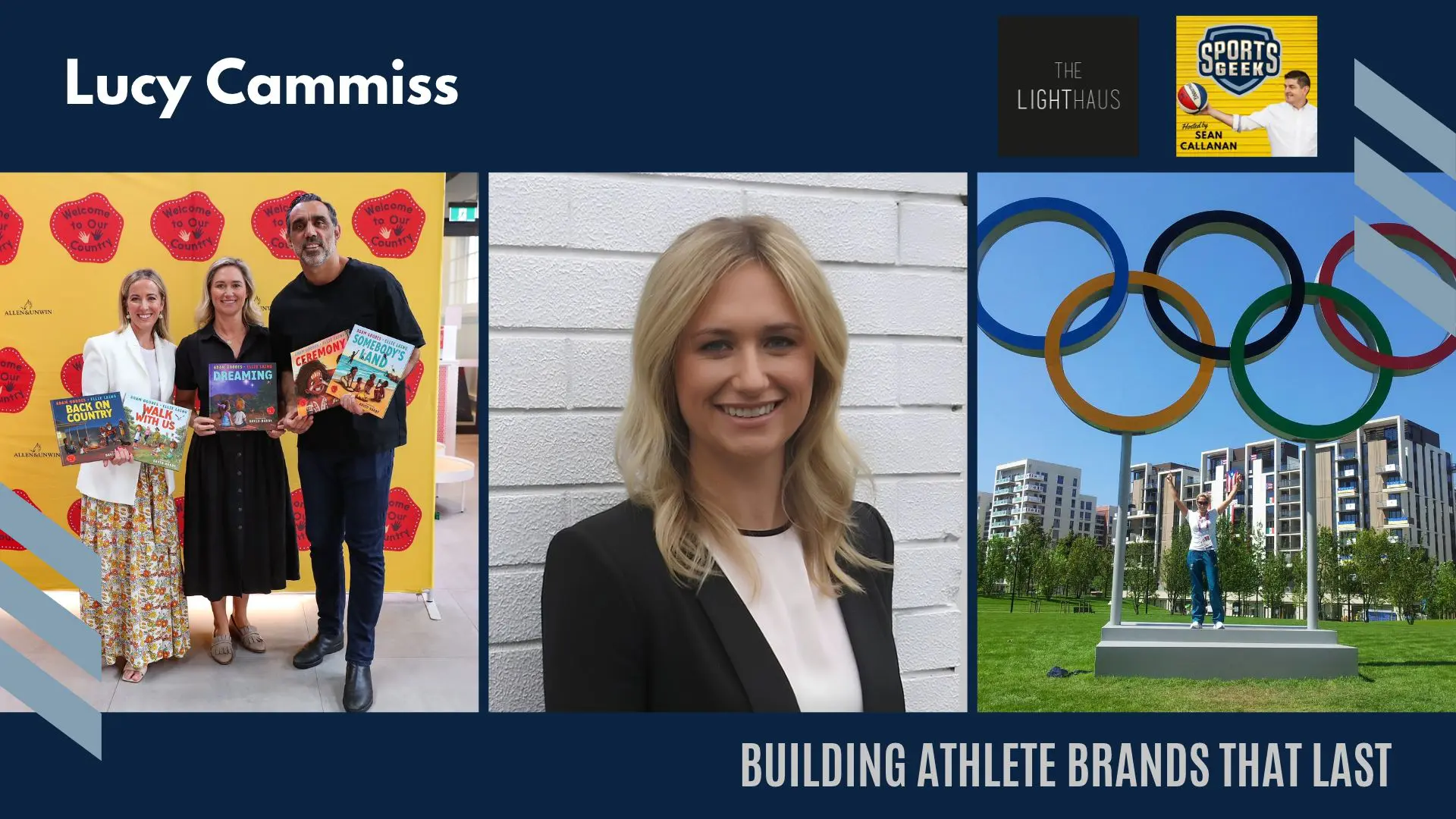
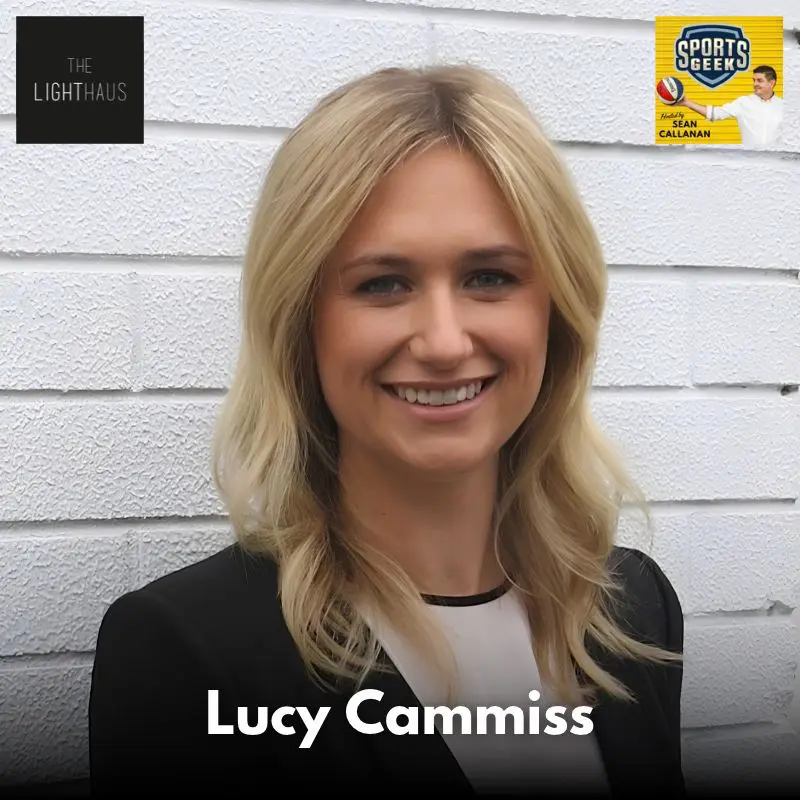
In episode 468 of Sports Geek, Lucy Cammiss brings more than 20 years of athlete representation experience, including being the first woman accredited as an AFL agent, to share insights on building athlete brands that last.
In this conversation, you’ll discover:
- How to help athletes use social media to build a legacy beyond the field, with guardrails like separate public and private accounts
- Why the opportunities an athlete knocks back matter as much as the ones they take, and how authenticity makes partnerships stand the test of time
- How a broad three to five year plan keeps every opportunity aligned with where an athlete wants their career and brand to go
- Why athletes need different support from draft preparation through to established stardom and life after sport
- How Max Holmes went from a social media photo to a Madden NFL launch collaboration amplified by Channel Seven and Geelong
- Why individual athletes are now their own content creators, and how shared media support and lo-fi content can help sports and brands benefit
- Why listening may be the most underrated skill in talent management
Listen to Lucy Cammiss on Sports Geek
Can't see podcast player? Click here to listen
Watch on YouTube
Interview Transcript
This transcript has been transcribed by Riverside.fm, no edits (please excuse any errors)
Sean Callanan (00:00.962)
Very happy to welcome Lucy Cammis. She is from The Lighthaus. Welcome to the podcast.
lucy (00:07.686)
Thanks, Sean. Thanks for having me. Yeah.
Sean Callanan (00:09.6)
Not a problem at all. Not a problem at all. I always start trying to understand people's origin story, how they got into the world of how they got in the world of sports business. What about yourself? How did you find yourself in the world of sports?
lucy (00:22.576)
Yeah, so I from a very young age I knew I wanted to work in sport. I played a lot of sport back in my school days and that was where I think, yeah, my passion for sport and and a career in sport began. And back then, you know, there weren't the opportunities that there are now in sport as a professional athlete. You either made the Australian team or or you know, you went and pursued a career, you went to uni and and y off you went type thing. So
Originally I actually wanted to work in sports physio. I'd spent a lot of time injured and so I'd spent a lot of time in a physio and obviously you know sports physio was a big part of the sports industry, it still is. but it was actually Andrew Lambert who you might remember from earlier this year did the double hammy coming off the MCG and went viral. So he was a friend of mine that I used to run with and he said
Sean Callanan (01:14.436)
that's right. Yep.
lucy (01:20.214)
you know, you understand sports physio, but have you seen the other side of physio? And he took me into a hospital ward and and showed me the other side of it. And I pretty quickly knew that that wasn't for me. And in the end, so I switched from doing my sports physio degree into doing actually a commerce sports management degree. and yeah so that was sort of the sliding doors moment I suppose and from there when I was at uni
very early on actually I did a work placement and Paul Connors was on a list of organisations that had had students from the uni before and I I had a link in with Paul I suppose through a friend of mine, Tim Clark, who was one of Paul's players at the time and was a good friend of mine growing up through school and running. And Tim said, you know, go and go and do it with Paul. And from there, after my eighty hours of field work,
Sean Callanan (02:06.125)
Okay.
lucy (02:17.318)
I got a job, Paul offered me a part time job and realised, you know, he could spend more time out with his players if I was in the office doing administration and that type of thing. And yeah, I ended up working there for twelve years. so from when I finished uni I went full time and and yeah, I was there for twelve years. So that was sorry, you go.
Sean Callanan (02:35.446)
So I mean th that's when we met. I mean, you were working at at Connors Connors Sports at the time and so you started there, you know, in admin and and a bit of doing doing everything. what led you to go from there to being an accredited agent?
lucy (02:54.362)
Yeah, so I started there probably in about two thousand and two, I think. and you know, at that point the business was in its infancy. Paul hadn't long before started it and he'd had the what's known as the super draft, in two thousand and one. And so his business was growing really rapidly and I was the first employee and it was a wonderful opportunity there, to, you know, get really broad experience. So over that the next few years, you know, I
Yeah, I was able to, you know, start to build the commercial side of the business and the players, which was a real interest of mine and probably not as much of Paul's. so we complemented each other w really well in that way. and I think but then I also I was involved, you know, again being one of only two, you know, Paul and myself in the business, I was really exposed to a lot of
the dealings with clubs and the players from a football agent's perspective, I suppose. And so getting my accreditation, taking that step to get my accreditation in 2005 as the first female was really sort of the next, I suppose, step. And it just was a natural progression that sort of happened. Yeah. Like you know, Paul was super supportive of it and and so I was really fortunate to have a boss that was, you know, really encouraging in that way.
And you know, it's wonderful now to see so many more female accredited agents in the industry. Yeah.
Sean Callanan (04:26.112)
And I mean, you know, being the first, you know, congratulations on that. But obviously it is it was very much a boys' club and and the the the conversations either being from a club side, to the players, what were some of the barriers you had to sort of break down to to one, I mean you get the accreditation, but then there's the other part of being accepted and and and you know, being seen as an equal.
lucy (04:51.27)
Mm.
lucy (04:55.214)
Yeah. Yeah, it it's it you know, it definitely was then and it still is now a male dominated industry. There's no doubt about that. There's definitely more women, you know, throughout f you know, the AFL industry now more than ever, particularly obviously with the inclusion now of AFL W, the W space. But yeah, back then, you know, on the whole, I think there I was I felt really supported and included. I think that
You know, I'd worked hard over the the years that I'd been in the industry and so the relationships and you know, I think that you earn the respect by the way you go about your business and that your reputation really precedes you in that way. So I just felt if you put your head down and you work hard, the respect would come and regardless of your gender really. But there were the odd pe there was the odd
you know, sort of person that was maybe harder to get respect from and maybe still is in some ways, but I just choose not to focus too much on that, I think. Yeah.
Sean Callanan (05:59.67)
Abs absolutely. And and the thing is w as a as an agent, you're you're as much in a results based business as the athlete. So every time you, you know, I guess having that different lens at Paul, like looking at the commercial side and as that marketing and those deals were coming, you that obviously you keep you keep banking the dollars, you keep having wins for your clients. That's the easiest way to you know, to I guess show the proof and show you show you show you value.
lucy (06:26.928)
Yeah, show your capability for sure. Like I think, you know, that's something that I'm really focused on even to to this day is to, you know, that the proof is in the work that you can do. And particularly now in having my own business, you know, there's no one to hide behind. It's it's only up to me. So I've got to get it gotta get out there and do the work and work hard and, you know, to prove that I'm capable. But equally, you know, some of the work that we are doing, you know, I think, yeah, is
That that is almost like my C V, I suppose. Yeah. Yeah.
Sean Callanan (07:00.524)
Yeah. and we crossed paths in those early days of early days of social media when when leagues and teams were athletes, we're all sort of figuring it out because like the rules were being rewritten. It wasn't all, you know, here's what media is and it's it's TV and radio and print and social was was growing. So now social has pros and cons for athletes. Wha how do you how do you appro how do you approach it now and and maybe give us some insight in what those early
lucy (07:23.995)
Yeah.
Sean Callanan (07:30.05)
While while West days were on on early socials.
lucy (07:34.64)
Yeah, it's it's changed markedly, right? Like I remember that. I remember when you started your business in Sports Geek, when social media was really just starting to take off and you were one of the first adopters of it and from where it was then to where it is now. And you know, you could never have predicted how far it would go and how quickly it would grow. but like you know, yes, there are pros and cons, and yes, I have a
you know, love hate relationship with it personally myself. But I think if you if you think about the athletes and whether that's, you know, an individual or equally a small business, you know, the power that social media has given those businesses and those athletes to have their own voice to communicate with their own audiences, their own customers from a small business point of view. But really I think what I encourage my athletes and talent
to use it for is if they want to, to use their platform to create and leave a legacy beyond the field, beyond the arena, and to use it to to allow them to tell their story and and yeah, to show what they believe in, to show their personality and to give their audience the insight.
Sean Callanan (08:44.205)
Yep.
lucy (09:00.978)
behind the scenes that they don't otherwise see. Yeah, I think in that way it can be super, super powerful. for those that want to and are comfortable with it. Like I also really encourage them not to do anything that they're not comfortable with. and so there's no right or wrong answer. Everybody is different in that way. some of the dangers, you know, with it and you you equally see the access of fans now directly straight into their
Sean Callanan (09:15.48)
Yeah.
lucy (09:30.564)
DMs and
And that can be really challenging without boundaries. But equally social media is, you know, dangerous for for kids and for adults alike, right? Like we all get trapped on it, we spend too much time on it. you know, the algorithm is wired that way. And so being able to turn it off, having good guardrails in place so that, you know Yeah, that you the the athlete is protected from an element of that and there's ways obviously
to set up those settings to do that. You know, and equally they can have, you know, two separate accounts if they want. So they have one that's their private account and then they have one that's their public facing account. So if they do want to step away from the public facing account at time f at at times, then they can do so so but also continue to communicate and engage with their close friends and family as well. Yeah.
Sean Callanan (10:27.508)
Absolutely. I mean, and again, a lot of those things that were there at the start are are are still there. Cause again, telling someone to g get completely off social media means they're also connect, you know, disconnected from their from their family and and and and their friends. And that means is even more i isolating. But I think the one thing that was the challenge early on and still is the challenge is what you just said there is share the story and share your story as you're comfortable with on the platform you're comfortable with. Don't you don't have to be
lucy (10:39.622)
Mm.
Sean Callanan (10:57.742)
a clone of a of another player that's doing it well because they're leaning into their strength, whether it's humor or being outgoing. It's about finding your voice and then understanding your voice. And then the other piece of of those guardrails of, you know, we don't have we don't have players sitting in the locker room reading the newspaper and all the criticism. So they shouldn't be doing the same through their through their phone. So it that has has both evolved, but is also those principles are still pretty pretty standard. So
lucy (11:05.209)
Yeah.
lucy (11:16.869)
Yeah.
Sean Callanan (11:26.37)
You then went out and Yeah, sorry, GoCon.
lucy (11:26.392)
Yeah. And I think I think that, you know, on social media in particular, like authenticity is okay, you know, so you know, you be your self, your authentic self and you know, the audience can see that as well. So again, you know, if it's what they're comfortable with, but also who they are authentically, and what comes naturally to them because again if it's forced I think that's just evident. Yeah.
Sean Callanan (11:53.902)
Absolutely. And and the other piece that you did discuss there is that is that platform piece. Like, you know, the early piece is yes, you can grow an audience, you'll get you'll get followers because you're on a field or you're, you know, you're kicking goals or you're doing things with your club. But then realizing that, hey, this is what this platform can be. It could be just commercial. It could be, hey, this can get you dollars, this can help you with this. But then that other thing is, hey, what are you passionate about? Whether it's politically or or a particular cause, you really can move the needle because you have got this
lucy (12:18.406)
Mm.
Sean Callanan (12:23.032)
platform and you don't have to, you know, wait for an interview or or do it. You can start having that direct conversation and championing that cause. And I think that would be something that that that you've been really pleased to see a lot of your athletes and clients really take advantage of.
lucy (12:30.671)
For sure.
lucy (12:37.445)
Absolutely. And I think you know, that is what goes on beyond their career on the field as well, right? Like if they do build that platform and that audience, then they can go on and continue to engage with that audience life beyond the field. and and to be able to use that, continue to use that in whatever they go on to do next. So
you know, if that is in a commercial or media sense or even if it is just standing up for causes and things that they believe in as well, to continue to have a voice and be able to use that platform ongoing beyond their playing careers, you know, it can be really powerful. Yeah.
Sean Callanan (13:16.76)
Yep. And so now, as you discussed, running your own shop in in the Lighthaus, what's some of the, I guess, key things that drive you in running your own business and what you want with how you represent your your athlete and your talent?
lucy (13:35.024)
Yeah, so when I started the Lighthaus, I was pretty clear that I wanted to work with a smaller group of people. so it's a deliberately small stable of clients that I work with now. and I wanted to have clients that really bought into it as well, that if I'm gonna work hard for them, that we're part of a team and you know, they're just as invested in it as I am. Again, when I think, you know, it's me that does the
you know, that's doing the work, I'm on the tools. I'm and I love that, like I genuinely love that. Like I I really get a lot of fulfillment out of helping others achieve their goals. I'm much more comfortable behind the scenes. and yeah, seeing them achieve their goals and working hard towards something with someone else is really fulfilling for me.
Where is it going and what do I want it to do? Yeah, it's an interesting question really. Like in the last probably few years, I've really sat back and sort of thought about what what the business, what I want it to what I want it to look like. And how when I started it, I sort of fell into having my own business as r as opposed to really having a really deliberate decision of okay.
Sean Callanan (14:55.288)
Mm-hmm.
lucy (14:59.46)
there's a gap in the market and I'm going to start this business in 12 months and plan for that. It just sort of came about. And, you know, at that time, you know, there was an opportunity there that I decided to take up and see if it would work. And then, you know, 10 years later it's still going. But in that time, I've had three kids myself. And so, you know, I've been juggling a business with three young children.
Sean Callanan (15:24.462)
Mm-hmm.
lucy (15:29.206)
And I think it was when my youngest started school a few years ago that I really went, okay, my kids are all at school now. I've got a bit more capacity. and and w what where are my passions, you know? And at that point in time I wasn't working with any current athletes and and I really missed being in sport. I think it was around the time that the Paris Olympics was on.
Sean Callanan (15:58.722)
Mm-hmm.
lucy (15:58.852)
And I had been fortunate enough to go to the London Olympics as part of the Australian Olympic team. And Olympic sports is a real passion of mine. And yeah, Paris was on, and friends of mine were going back to Paris. And, you know, I was like, damn, I should have been more organized, how how amazing it would have been to be over there. And and then sometime after that, I actually took my kids to a Maury plant meet in Melbourne and
we were sitting there and we'd been at the footy actually earlier that day and we'd gone over to the athletics and my husband was sort of like, we're going to the athletics, you know, this is boring, how boring. And then we got there and I hadn't been to an athletics meet in about twenty years. And and we got there and it was a vibe. There's music, there's excitement, there's action, you know, the kids can run around, there's and the depth in the talent on the track and the field is really what struck me. And I was like, wow.
Athletics is in a really exciting space here. And as I was sitting there, I was like, This is what gets me excited. I I need to to get back more involved in sport. so yeah, so that's been a deliberate decision and that's really where my focus is right now in helping the next generation of of athletes come through along with, you know, some of my more established talent, I suppose. Yeah.
Sean Callanan (17:21.504)
And so athletes go through different phases of their career. You know, you you're a rookie and then you're you're an emerging star and then you're the you're the star. You're the you're the one that everyone wants. And then there's that transition to post career. The next phase, that second chapter. how do you like how do you manage that relationship, you know, either with a client if you're going through them from hey, they're starting out, or when you're picking them up in different parts.
lucy (17:36.494)
Next phase. Yep.
lucy (17:40.954)
Mm.
Sean Callanan (17:51.052)
Because there are probably agents that go, we're really good at you and you're a star and we can have all those deals in. sorry, you're not a moneymaker anymore. We don't need you anymore. And you're lower on the priority. Where do you where do you find your best work happens and how you give advice to athletes in different phases of their career?
lucy (18:07.556)
Yeah, I think it's changed. you know, I suppose as I've got older and more experienced in the industry and equally probably with my perspective, a different perspective as a mother as well. Like my lens on that has changed, I think. Like I find now, yeah, they do definitely need different support at different phases of their career. I think one thing for me for for some athletes, and not everybody wants to do this for but for those that do want to go on
Sean Callanan (18:19.672)
Mm-hmm.
lucy (18:37.134)
And have, you know, continue to have I suppose, a a career in the public beyond their sporting lives. setting the foundations for that during their career is really important. And I remember doing that with some of them when I was at Connors. And equally, like I've been fortunate to work with Adam Goods for 25 years, and that's definitely something that he and I have built really deliberately with in his career post-retirement as well. And I remember
Sean Callanan (18:58.498)
Mm-hmm.
lucy (19:07.194)
when he did retire and you know having a conversation with him about it and and just knowing that all of what he'd achieved on the field, that his best work was really yet to come. And it's wonderful to see now that the impact that he's having in a different way. yeah, yeah, that's been really special and and you know, there's still heaps of scope and things that Adam and I are working on together.
which are really exciting as well. But I think, you know, when you go back to different, you know, the different phases and the support that they need. Yeah, I'm working with some some younger players now that are coming through the draft system and helping them get prepared for that, has been, you know, really, really enjoyable. And I think working with a small number of them, but working really closely on it in in their draft preparation, helping them get ready for meetings with clubs.
and and sharing in that journey. yeah, I've really enjoyed that in the last couple of years. And then yeah, even helping helping others that are really established on the field but haven't maybe grown their brand as much off field yet. So you in some ways you're sort of starting with a clean slate and and in Max Holmes is probably one
an example of that that Max achieved a lot on the field in his first few years of footy. And and so now yeah we're you know we're starting to think about how we grow his brand off field and what opportunities are the right fit for him and what where are his interests, you know. So an example of that I suppose would be a recent
Collaboration we did with the NFL. So ahead of the a game out here in Melbourne, Max is an an NFL fan of the Rams, and he'd been over there a few years ago. And there's a photo that he shared on social media back then, and I sent it to the NFL and said, you know, Max is a fan of the Rams, you know, they're coming out here some ideas of, you know, ways that Max could be involved. And one of them
Sean Callanan (21:05.581)
Mm-hmm.
lucy (21:29.55)
was around Madden, the game, because he's equally a fan of esports and he'd collaborated with EA before from a FIFA point of view. And you know, over a few months we got to the point of of building that out. And he actually filmed some content for the NFL for the launch of the Madden game. And he brought his teammate Grian into it. And then we were able to sort of amplify that through
Sean Callanan (21:39.969)
Okay.
lucy (21:58.57)
Channel Seven and the cats getting on board of it as well. So that was yeah, that was really really great to see. And so I think, you know, a lot of it is about finding the right opportunities for your talent that are authentic to them. Yeah.
Sean Callanan (22:13.474)
And and you know, in the case of whether it's Max or other athletes, is it you feel like there is a moment when they go from, you know, the focus, you know, on the field and the high performance, which is their job, to start thinking you know, what will next be? And that's when they start like getting that longer term view. How much how much is that a an ongoing conversation to sort of, you know, you you you want to nudge them to go, I know they'll eventually get there. I know that light bulb will go off when they go.
what am I gonna do when I'm thirty-five and I'm just finishing up and that kind of thing? How does that has that long term conversation happen with your athletes help help get them there without like pushing them pushing them there?
lucy (22:56.73)
Yeah, so that's that's you know, I think everyone, that's an individual probably question. Everyone probably comes to that at a different time and in a different way. And I work with my clients to sort of have like a th a broad three to five year plan that we're working towards and so we catch up regularly and and we ensure that opportunities that we're taking on, you know, align and
with our three to five year plan. so but I think
lucy (23:36.002)
Yeah, like I think I think if you talk about footballers in particular, like they come in and obviously, you know, they they get their opportunity in the club and then it's about establishing you know, getting their first game and then it's about obviously establishing themselves as a regular senior player. And then you know, I guess as time goes on and they start to go, yeah, now I belong here, I belong in this team, and then, you know, potentially move into s a more, you know, whether they have an official title of a leadership.
role or not, but whether they're one of the more established and older players and a leader on the field as well. Yeah, that that that just happens gradually over time, doesn't it? But I think as they start to become more comfortable and established there, then they start to realize that, you know, the end of their career is potentially sooner than the beginning. And so
over that, you know, I guess then in in time and whether they're studying off field or something like that and what they want to do, where their interests are, I think it's really important to encourage athletes to have another outlet outside of their sport. you never know when your career on field or track or or whatever arena you're in can come to an end really quickly sometimes. And and equally I think it it really helps them
you know, have something else to think about and focus on and take their mind off their professional sport for a period of time, which I think is really good for their mental health as well. so I I think that, you know, how do you get them there? You know, it can be gentle conversations, I suppose. It depends, you know, I think that that just evolves over time naturally and and depending what they want to do next, you know, what what
Sean Callanan (25:23.34)
Yep.
lucy (25:33.316)
And some don't know yet. You know, I think the transition out is so difficult for so many of them. And I speak to, you know, loads of retired athletes, AFL and other sports, and, you know, the theme is the common theme is there that they all find the transition very difficult. Yeah, unfortunately. Yeah. So I think and it and it takes time, you know, and even it doesn't matter whether you
Sean Callanan (25:34.989)
Yeah.
lucy (26:00.688)
played for three years or for thirteen and whether you whether you went out on your own terms or whether you were pushed or and whether you achieved all that you could have or you felt like there was more left there to do, yeah, the transition is is really difficult. Yeah.
Sean Callanan (26:19.646)
absolutely. One thing you did touch on before, which is I guess the rise of women's sports, especially, I guess the commercialisation of women's sports is probably a better way of of of putting it. It's, you know, over the past 15 years there's there's more money flowing into women's sports, but it's still a still a changing, changing model. How do you help, you know, athletes in that space and also athletes in in other sports where the, you know, where the where the system isn't isn't already set up and
and helping them to better, I guess, fund their athletic pursuits.
lucy (26:55.76)
Yeah, I think firstly, you know, the rise of professional female sports has been wonderful, right? For girls and women to have those opportunities, as I sort of touched on early on, that, you know, when I was coming through it was, you know, the Olympic pathway or the Australian team and nothing else below it. So now for girls to now be in a position where they can choose their sport and and decide do they want to have a professional athletic career?
And it's wonderful to see opportunities for yeah, for brands within that space to now be connecting in with athletes, right? And I personally think that sport offers so much for the community and for children. You know, my children I'm always encouraging my children to play a range a a wide range of sports. mind you I have got boys who are very active, so they've got lots of energy to burn. But
I think, you know, when I look at society, what sport offers kids in general, from resilience, you know, teamwork, overcoming adversity, socialization skills, it obviously gets their endorphins flowing, helps them have cr create healthy habits with exercise and and just the joy in, you know, being outside with your friends when we live in a world where so many of them are stuck on devices too much.
you know, we've got obesity and mental health epidemics and the health system and is already struggling that I think, you know, k and the and equally for parents, you know, parents are time poor now. Getting your kids to to sports training is really difficult and the the costs involved in a cost of living crisis is is the costs for multiple sports are expensive. So for families they have to make choices, right? But I think
The more children can be involved in sport, the better for our society. And I look at what community sport offers, you know, the community and local towns, small towns, and the opportunity to all come together and watch your local team, or or equally, you know, the junior under nine footy, you know, and and be on the parents be on the sidelines and their opportunity to to get together and, you know, really enjoy watching these little kids just run around having the time of their lives whether they're getting
lucy (29:18.224)
Ten kicks or none, you know, and they're more interested in just doing handstands or something. Yeah. But I think I've gone way off topic there. But yeah, from a professional female.
Sean Callanan (29:28.418)
That's all right. But going back I I will bring you back to to from a professional yeah, women and and I guess what what you know how the funding has changed. and again, you know, it's part of the stuff that I've been involved in in social, in that so many f female athletes from mine get social, get that sense of community, like back to the point of work on the platforms that you like to work on, like they're having a lot of success there, but also having lots of success on the court, on the field, on the pitch.
lucy (29:54.659)
Mm. Mm.
Sean Callanan (29:58.444)
depending on what it is. How how do you think the, I guess the athlete model and and funding women's sport can continue to grow? Because I think we're just at the start.
lucy (30:09.476)
Yeah, I I agree that we are just at the start and it's been wonderful to see, you know, so many of those brands that are in women's space, whether it's, you know, fashion and beauty and and health, you know, get it now have the opportunity to partner with athletes as role models as well. and I think, you know, one thing that has really struck me is that athletes
you know, individual athletes in particular are now often not only expected to train, but they are their own content creators. So while they are training, they are creating their own content. And, you know, so there, you know, there may be like you know, there may be like a twenty year old that's a runner and, you know, she's not only down on the track, but she's gotta be setting up her tripod while she's
you know, warming up and that type of thing and then sh after a session she's editing that content and sharing it herself. You look at the difference with professional sport that have, you know, media and social media teams around them, to be able to do that for them. And I think, you know, broadly, even even other teams, right, like so the Olympic teams that come in for a short period of time, whether it's water polo or whether it's hockey or whether it's
Let's just go with those two. But you know, they have an opportunity. If you if you think about a water polo team, they are the girls are in the pool, they can't be there with their phone. And so if they're coming in for a camp and the opportunity to grow the sport of water polo and to showcase that, if they had somebody there that's, you know, creating a whole lot of content for them doesn't have to be expensive. That's what you see now is that athletes, when they're creating their content, it is just on an iPhone, it's not
it's it's lo-fi content, th the consumer is great that is is happy with that because it's just showing them authentically as they are going about their training session. So we don't need to think of it as spending huge amounts of money from an investment point of view for content that is literally quite quickly scrolled past. But, you know, if they did have that social media team there to create that content and and get it to them in a drop box or whatever straight after the session that then they've got content that they can go and share with their audience.
lucy (32:30.95)
you know that's invaluable for them but it also helps the national team to be promoted through their players and equally for the sport of water polo to reach a broader audience as well. So there's a win-win there. And I think teams that are going to get on brands that are going to get on board with that, they're gonna benefit from it, right? So I think yeah so many of the athletes, individual athletes these days are really
savvy on their social media so much more than me. And yeah, to be able to do what they do in not only training, but capturing it and then resharing it in a creative way to their audience that's engaging. the ones that get that, there's a a real opportunity commercially for them.
Sean Callanan (33:17.288)
absolutely. And the thing is, you know, compared to 15 years ago, they're they're they're what we would call digital natives. They've grown up on the platforms. you know, it's not like, you know, talking to a 30-year-old Australian captain that I did 15 years ago and he's like, why do I need to be on this platform? You know, because he didn't understand. He didn't grow didn't grow up on it. Whereas, you know, if you look in the US and everything that's happening in the college system with name, image, likeness and, you know, volleyball players that are
lucy (33:26.17)
Yes.
lucy (33:33.584)
Yeah.
lucy (33:42.254)
Yes, massive. Yes.
Sean Callanan (33:44.216)
that are that are that are TikTok stars and they're getting scholarships and they're getting you know now they're getting paid as college performers, but they're also, you know, they've grown up in the high school system and they've learned the they've learned the algorithms and they've learnt how to play with the platforms and they know what content works. And yes, there's but they're also getting recruited for their for their ability. So I think it's a bit of the inverse when early on it was like, you should support your club and your grow your followership will grow because the club's got a big account and big follower numbers.
lucy (34:00.976)
Mm.
lucy (34:04.966)
Athletic.
Sean Callanan (34:13.718)
I think the the models flipped. I think the power is with the athletes. It's you know
lucy (34:16.486)
Hundred percent. The power is with the athlete. Hundred percent. The the the power of the athlete's brand has never been greater. And so therefore the opportunity for those athletes that want to capitalize on that is there, there's no doubt. And the sports that will benefit the most from it is those that realize that and you know are willing to broaden, you know, the pool of athletes that they use to grow their sport. Because if we're focused only on too few.
you know, it's the same ones all the time. You're only hitting the same audience. So and equally I think there's an opportunity for sports to cross promote more, to use each other and work together. And and I look at that also more broadly, I think, with Brisbane on the horizon and you know, the games up there that we've got, home games comes around once in a generation. And if you know, w I feel like Australia has an an obligation to support our Olympic athletes that have chosen
that pathway to represent our country and you know for corporate Australia but equally for professional sporting codes to get behind those athletes and support them. Yeah. And support can support can support can support can be financial, you know, commercial opportunities and partnerships, but support can also be helping to to grow their brand, giving them some airtime to their to their
Sean Callanan (35:24.066)
Ab absolutely you get y Yeah, sorry, keep going.
lucy (35:41.806)
other sports audience, right? To cross promote them in that way. because again, if if we all work together to to support these athletes, you know, we're gonna have more success on the podium, which is ultimately what we want.
Sean Callanan (35:56.242)
absolutely. And that was the the conversation I had with Nat Cook, sort of on the same lines of how do you support the Australian athletes? Well, you've got six years. It's not too you don't wait, don't wait six years time for two weeks. You've got six years to build these relationships, tell these stories, grow your brand with that, with that athlete. So when they are on the tell and everyone is, the whole world is tuning in, everyone knows knows it. And and you know, we sort of spoke about those early days of social media, but we're sort of going through this second evolution now with
lucy (36:04.23)
Mm.
Mm.
Sean Callanan (36:25.558)
Obviously we've still got social and it's still the algorithms are changing, but we've also got this this creator creator and influencer space. So we've got these new voices that are that are talking about sports in a completely different manner, that are becoming channels in their in their own right. How do you navigate that now as a as an agent to say, well, yes, previously we would say it would be great to get an interview on channel seven, whereas now it's like, can you do an interview or a skit with
with that influencer because that's an audience growth. Like it's it's such so much so much new opportunities.
lucy (36:56.986)
Yeah, yeah. Yeah, yeah. Growing your brand. Hundred percent.
To grow brand, a hundred percent, whether it's through podcasts, whether it's through collaborations with yeah, influencers or
lucy (37:14.936)
Even other athletes, right? Like again, like cross promote in that way to grow to grow their brand. Definitely that is, you know, part of what I do in helping an athlete grow their brand. You know, again, it's like you build the foundations of the house first before you build the house. So I think a huge part of it in supporting athletes is to help them grow their brand. And how you do that, whether it's through traditional media, social media or collaborations,
It's it's always super important with the opportunities that you take on and I think even more so the ones that you knock back. So you do it always, or I do, with a long term vision, you know, and so you know, you might lose some money early on, but I think that you'll reap the rewards in the long term. And I think these days, again with social media, you know, you might get a quick buck, but everybody can see through it if it's if
if it is just that, you know. So I think like the authenticity piece is is even more important. and I think they are the ones that they are the partnerships that stand the tent the test of time. Yeah.
Sean Callanan (38:26.766)
And then from a from an athlete representation point of view, like it's it's changed it's changed a fair bit in in in your tenure in in being in the industry to go from, you know, get the contract sorted and take my percent and and help you manage your life to all of these extra pieces that are now part of it. What what's the most underrated skill in talent management?
lucy (38:46.214)
Mm.
lucy (38:50.79)
Gosh, underrated skill.
lucy (38:55.75)
Skill. Multitasking.
Sean Callanan (38:58.658)
Yeah.
lucy (39:02.438)
the underrated most underrated skill is
Sean Callanan (39:04.526)
It does make a a multitasking point is a good one. Sorry, is a good one because there there's so many facets now to be able to be across an athlete's life.
lucy (39:11.756)
yeah. my God. Absolutely. Even if I think about, you know, and I to be honest, like the variety is one of the things that I love most about the job and and ha always have done is the variety of people that you work with, campaigns that you work on, brands that you work on, you know, what your day can involve can be so different. And even if I think about, you know, the conversations that I had just yesterday and how many, you know,
Who they were with and what they were about and the variety and breadth in that. I think, yeah, definitely multitasking, the amount of different hats that you have to wear, you know, as a manager, agent, you know, yeah, from a commercial sense, from the sports governance sense, you know, finance, brand, PR, social media, then you
part counselor sometimes, you're speaking with their families, speaking to the media. you know, the list goes on. But that's one of the beauties of it, I think. But I think also probably the ability to be able to switch off. Like you know, that you can get to the end of the day and sort of turn your mind off to sort of stop thinking about, you know, the next idea for the next
Sean Callanan (40:26.712)
Okay.
lucy (40:37.978)
Collaboration as well. But I think probably also the most underrated skill is the ability to really listen, you know, the the ability to really listen to your client or athlete and understand them and what drives them and how you can assist them, I think is, you know, super important in this industry because everyone's different, you know.
And it's gotta be personal. it's gotta be unique to the person. you know, the one a one size fits all approach isn't gonna work. And and I also think that athletes, you know, and and the next generation probably in general, you know, what the last generation wanted and what the next or this sort of the next generation want is also very different.
And so being able to adapt to that. And I think more of them these days are understanding the power of their brand if they if they want to use that and the ability to have a voice and to use their platform. I think you know, I think that that's again probably goes back to well this generation have grown up with this versus, you know,
Sean Callanan (42:02.478)
Mm-hmm.
lucy (42:04.28)
others that were well and truly into their career when social media began and that they finally had this ability to have their own voice and platform and communicate directly with their audience. You know, back then they they were still limited to any media opportunities that the club media department would set up or allow them to do, you know, and then social media put that on its head, didn't it? So I think
Yeah, the current generation, when you look at them, whether they are athletes or professional athletes or sports people or or just, you know, kids finishing high school and going into the workforce, they're all using it in a in a completely different way. But I think in general, what I hear from also from friends that work in other industries as well is that this next generation, they're not as patient. You know what I mean? Like they want
Sean Callanan (43:02.062)
Mm.
lucy (43:02.436)
They're ready, they instant, whether it's the instant gratification that's come from social media, it's like with my kids, you know, it's like they want an answer to something. They're like, search it up, mum, just search it up. And I'm like, But hang on, can we think about it first and try and work it out ourselves? It's like, no, search it up, Mum. It's like even my eight year old, search it up. It's like, hang on, like, slow down, you know. So I think,
Sean Callanan (43:12.63)
Hmm.
lucy (43:24.654)
Yeah, whether you know, and so when they come in from uni or whatever into the workforce, you know, all of a sudden they expect to be able to
climb the ladder, I suppose, faster and and achieve more quicker. And which is wonderful, that aspiration. but I I also wonder are there more entrepreneurs out there in this next generation as well? I'm not sure. Yeah.
Sean Callanan (43:52.29)
Well, I mean, again, it's sort of coming down to what they they see. And, you know, again, if there's a lot of the Australian, the Australian athletes will be looking at, you know, the US superstars or the European superstars that are, you know, setting up their own media companies, running their own businesses, you know, doing things on their own channels and announcing things in their own channels and, you know, less so doing, you know, things for the club as it's expected. So it's like
that power of the athlete and the athlete's brand and the athlete's voice. you know, they don't have the they don't have the audiences of Messi Ronaldo LeBron, but they realize that, hey, my voice does have does have weight and my platform does mean something. And so that's that that shift that's happening both in the media and and in and in, you know, if we saw talk about club land. But it's also that opportunity for athletes that that do get it and be, you know,
lucy (44:19.725)
Mm. The shift.
lucy (44:44.006)
Mm.
Sean Callanan (44:48.352)
And maybe a little bit of impatience means they do get there and they get there quicker.
lucy (44:53.454)
For sure. For sure. I I was struck by that. I was actually lucky enough to go over to the Winter Olympics in Milano, Cortina earlier in the year. And you know, you could see that over there, like even with Eileen, you know, and her power off the slopes, you know, and her audience and influence. and I was there one night when she competed and watching her. and then equally saying I think she was
in an event with Indra, the Aussie young Aussie girl. And yeah, she went over to her afterwards, embraced her. And I think like what that meant, you know, wow you know, it's such a wow moment to Indra to have, you know, Eileen come and recognize her and congratulate her for what she'd achieved. yeah, it was it was wonderful to see that she, you know, they
while she does have such power and influence to still take the time to be connected in, you know, with the sport as well and the y the other athletes that essentially she's competing against day in, day out. Yeah.
Sean Callanan (46:00.502)
absolutely. Well Lucy, I really do appreciate you taking the time. It was good to reconnect recently at the at Sport Next. I want to get to the Sports Geek closing five. do you remember the first sports event you ever attended?
lucy (46:11.42)
yes.
lucy (46:16.024)
Like other than you know, going to the a little little athletics track to compete myself, you know, the sports event that I would have attended, I think it might have been actually randomly a game at Waverley Park back in the day. Yeah. Yep.
Sean Callanan (46:28.28)
Okay.
Do you remember who played?
Who or who would it have been? I mean, 'cause someone's dragged you to
lucy (46:35.896)
I I think it might have been like Geelong and Hawthorne. And I just remember like whoever we went with, like we took, you know, the thermos and, you know, like the eskey full of I don't know baked goods or something like that and sat up in the stands and, you know, I like, Wow, this is what it's like to go to the football
Sean Callanan (46:53.57)
So you would have been a lot of fo sports events in your time now. do you have a favorite food memory or a go to food at at a sports event?
lucy (47:02.788)
Not really go to food, but I definitely remember being over in the States. I think, you know, they do sports food, you know, s food at sports events, they do sports events so well over there. But being at like the basketball or the baseball in in New York and yeah, having some pretty epic I d I don't know if it was fries or what exactly it was, but yeah, being struck by the the amount of variety as well. And equally I heard the other like
earlier this year that they were now starting to fly food in on parachutes to seats so that the fan didn't even have to get out of the seat. So, you know, they're definitely taking the food offering to the next level over there.
Sean Callanan (47:39.249)
okay.
Sean Callanan (47:46.968)
to to review, gotta be careful of what what is getting delivered that way, but that's fine. what's the first app what's the first app you open in the morning?
lucy (47:51.984)
Yeah.
lucy (47:56.597)
Probably depends a bit on my notifications and what's come through overnight, like text message, email, but otherwise it's definitely probably Instagram. Yeah.
Sean Callanan (48:05.236)
Okay, that's all right. and is there someone that you follow? It might be someone in the industry, it might be an author, might be someone online that the podcast listeners should follow.
lucy (48:17.334)
I think one to follow like depends what you're interested in. I think like in general, it's most important to follow people that make you feel good. You know, maybe there's some humour in there, they're not taking things too seriously. Definitely people though that make you feel good. But if you're after someone that's got some good messaging in there at the moment, I think Libby Trickett's doing a really good job of that.
Sean Callanan (48:39.552)
Absolutely, Olympic Olympic champion. definitely worth a follow. Then lastly, and you might have spoiled the result, but that's fine. and you can answer this. I always ask people to answer it personally, but then also somewhat professionally. So I want you to answer this question from yourself and then maybe from a from an athlete point of view, knowing that it's different, you're putting them all in one group. But what social media platform is your MVP?
lucy (49:03.482)
Yeah, I probably did just already answer that, didn't I? yes, so I spend most of my time on on Instagram. Mind you, if you count WhatsApp as a social media platform, I definitely spend a lot of time in sports group you know, in parent groups for kids sport in WhatsApp. My God, that WhatsApp thing just yeah. to to have your WhatsApp group in order WhatsApp
chat in order and to keep tabs on that thing like is a is a task in itself. Yeah. for an athlete
Sean Callanan (49:37.378)
Yeah. Yeah. And then what platform would be the MVP for athletes at the moment?
lucy (49:44.981)
it's probably split between Instagram and TikTok I'd say, depending on where they're most comfortable. Yeah.
Sean Callanan (49:51.914)
Absolutely, absolutely. Lucy, thank you very much for coming on the podcast. I always ask people who have listened to the podcast that enjoyed and got value, to reach out and say thank you. What's the best ways for best way and place for people to do that?
lucy (50:08.036)
Yeah, thanks for having me, Sean. It's been great. Really nice to see you again and reconnect. As I said, from when I remember when this big your journey in Sports Geek began. So we're going back a long way there. And so it's wonderful to see that you know you've you know your businesses survived, you know, that transformation and and really that you were at the at it in like you were one of the founders in its infancy. so
Sean Callanan (50:34.008)
I appreciate it.
lucy (50:36.932)
How you can connect with me, yeah, is on Instagram at the Lighthaus. Lighthaus is spelled L-I-G-H-T-H-A-U-S. or you can find me on on website as well, thelighthaus.com.au.
Sean Callanan (50:51.471)
terrific. Well Lucy, thank you very much for coming on the show and I look forward to maybe catching up with you at a sports event soon.
lucy (50:58.896)
Sounds great. Thanks, Sean.

Turn 15 minutes a day into sponsorable content your partners will pay for
Sports Geek AI is a done-with-you content system that creates daily newsletters, podcasts, and social posts—giving your commercial team new inventory to sell.
Resources from the podcast
- Please connect with Lucy Cammiss on LinkedIn. Let her know you listened to the episode. Please say thank you if you do connect.
- Explore The Lighthaus website, read more about Lucy and the business, and keep up with their updates on their socials.
- Watch Sean’s episode of SEAT Solves, featuring Scott Ahlstrom of SwitchBase on unifying venue operations. Become a SEAT member today.
- Check out the November edition of The SEAT Report – Should Ticketing let AI agents in?
- Listen to our new Daily podcast – Sports Geek Rapid Rundown.
- Check out Digital To Dollars – our self-serve program to help you drive more revenue from your digital fan base.
- Podcast episodes you should listen to:
- Throwback episodes you may have missed:
Podcast highlights
Highlights from episode 468 with Lucy Cammiss:
-
- 01:52 Lucy's origin story: from school sport to sports physio plans
- 02:50 The sliding doors moment: switching to sports management
- 04:24 First employee at Connors Sports Management and the first female AFL accreditation
- 06:25 Being a woman in a male dominated industry
- 07:56 The proof is in the work
- 09:04 Social media for athletes: building a legacy beyond the field
- 11:00 Social media guardrails: DMs, switching off and separate accounts
- 12:56 Why authenticity matters
- 15:05 Starting The Lighthaus with a deliberately small stable
- 19:37 Different support at different career stages
- 20:07 Working with Adam Goodes for 25 years
- 22:59 The NFL and Madden collaboration with Max Holmes
- 24:26 A three to five year plan for every client
- 27:03 Why the transition out of sport is so difficult
- 28:25 The rise of professional women's sport
- 31:39 Athletes as their own content creators
- 37:26 Six years to build athlete stories
- 40:41 Multitasking and the many hats of a talent manager
- 42:07 Why listening is the most underrated skill
- 43:34 What the next generation of athletes want
- 46:23 Athlete influence at the Milano Cortina Winter Olympics
- 47:30 Sports Geek Closing Five
Drive revenue from your digital audience
Check out our podcasts with SEAT
We’ve launched two monthly podcasts in collaboration with SEAT.
Sean hosts The SEAT Report with Josh Barney. Check it out
Each month, Sean will profile a SEAT partner on SEAT Solves.

Listen To Sports Geek
Recent Sports Geek Reads
- NRL Highlights for Creators, the PGA Tour’s ‘Secret MVP’ and Apple’s Video Podcast Push
- LIV Golf’s Rise and Fall, RedBird’s Milan Venture & ChatGPT Wallet
- Gotham FC’s $350M Valuation, Instagram’s Sports Section & NHL’s $5B Franchise
- BBC’s AI Live Sport Revolution, US Open Revenue Records & the San Jose Earthquakes’ $625M Sale
- LIV Golf’s Collapse, Peacock’s AI Overhaul and Why Sports Rights Might Not Be Too Expensive
- F1 Team Valuations Hit $8.2B for Ferrari, While Locked On Podcasts Top 1 Billion Listens
Listen to Sports Geek Rapid Rundown daily