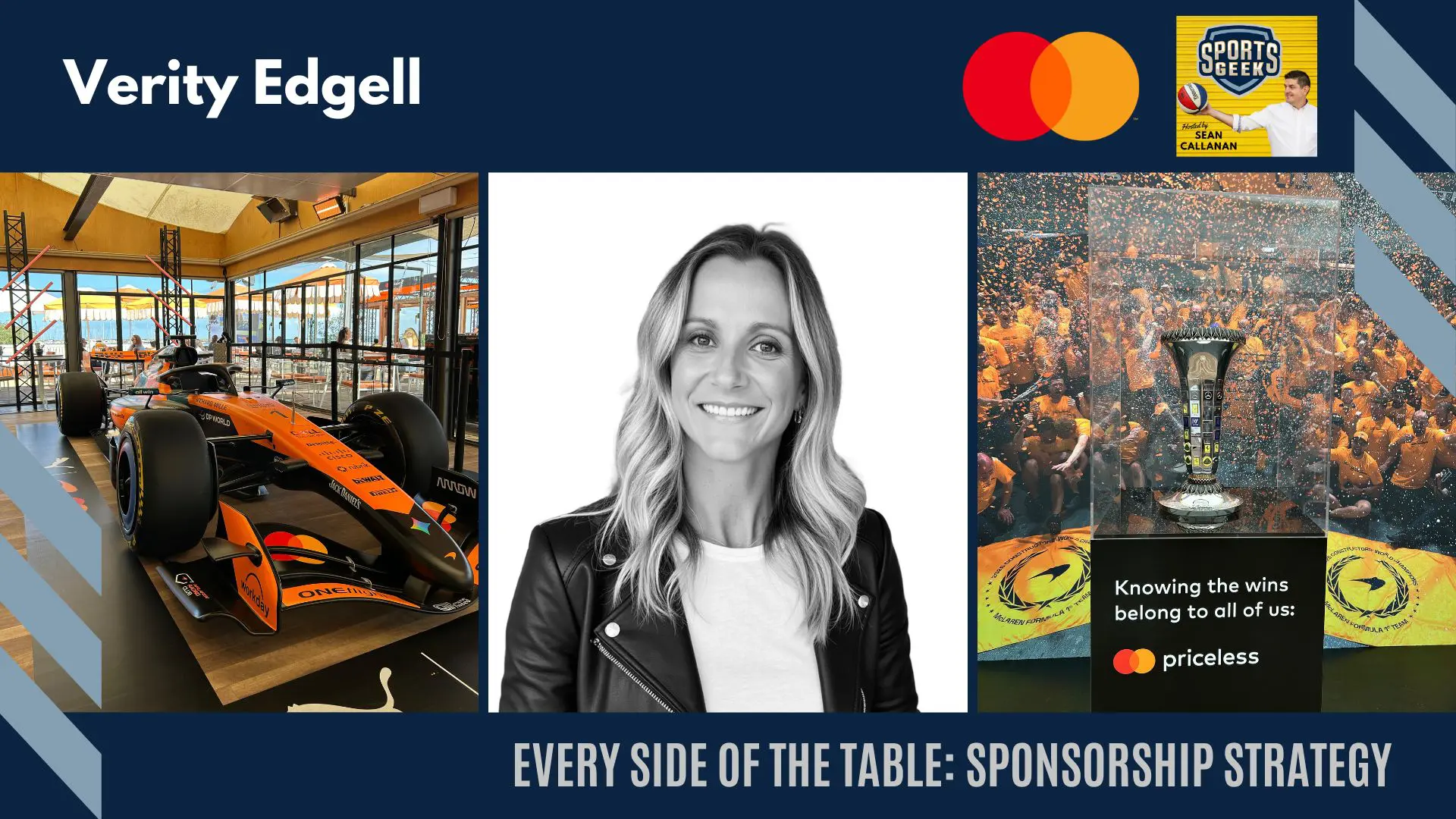
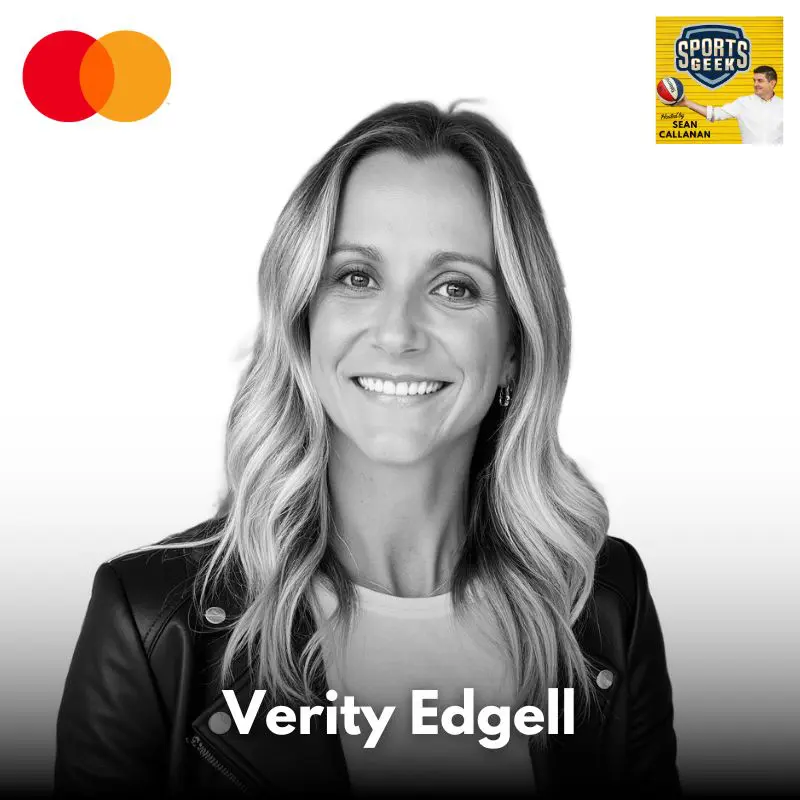
In episode 455 of Sports Geek, Verity Edgell brings a rare all-sides-of-the-table perspective — agency, rights holder and now global brand — to share how Mastercard turns major sports partnerships into commercial outcomes.
In this conversation, you’ll discover:
- Why treating a sponsorship like a marriage and not a box-ticking exercise is where the real value gets created
- How to move a negotiation past the inventory list to a genuine value exchange built around business objectives
- Why the smartest brands start with the fan, not the logo, and how to activate authentically before you get called out
- How Mastercard makes a global partnership like McLaren F1 hyperlocal for Australian and New Zealand fans
- Practical advice for rights holders pitching sponsorship and the number one mistake that lands proposals in the bin
- How to balance brand storytelling with the business metrics that actually get people excited in the boardroom
Listen to Verity Edgell on Sports Geek
Can't see podcast player? Click here to listen
Watch on YouTube
Interview Transcript
This transcript has been transcribed by Riverside.fm, no edits (please excuse any errors)
Sean: [00:00:00] Very Happy to welcome Verity Edgell. She's the director of consumer marketing and sponsorships Australasia at MasterCard. Verity, welcome to the podcast.
Verity: Thanks, Sean. Thanks for having me.
Sean: Not a problem at all. Um, we connected many, many years ago, um, uh, on, on the old LinkedIn. Um, but I always start my, uh, podcasts trying to figure out people's sports business origin story.
Sean: What was… How did you get your first foray into the world of sports?
Verity: Yeah, so look, I think, uh, my love of sports sort of began when I was little. Uh, growing up with two brothers and a, a dad who was a mad sports fan, um, I sort of didn't have a choice. So, um, I very quickly learnt to love sport, whether playing it, um, attending, watching.
Verity: And when I was at uni, uh, I had to make the decision to, to pick my major, and sport marketing was there and I thought, “No-brainer.” If I can combine something I'm so passionate [00:01:00] about personally and professionally, it felt like a dream come true. So, you know, at the end of, of that degree, I was lucky enough to land my first real job.
Verity: Um, and it was a grad role at a agency, Octagon. So it was actually in the athletes and personalities division which, you know, at the time I was I think 20, and, you know, being able to manage the likes of Mark Webber and Alan Border, James O'Connor, um, you know, it really opened my eyes to I guess the breadth that sport sort of enabled you.
Verity: Um, you know, working on some big clients such as Mastercard actually, which is a bit of a, a full circle moment for me. Um, and, you know, absolutely loved agency. Fast-paced, um, you know, you learnt good work ethic, and then, um, yeah-
Sean: I mean, that would've been a really good starting, a good starting point in that athlete personality, especially in that range, like the sort of the same range when I started SportsGeek when athletes [00:02:00] were figuring out what social media was.
Sean: Um, you know- Mm-hmm … deals were changing from store appearances and, you know, the ones that, uh, sort of started developing, uh, I guess social followings and sort of, that, that sort of figuring out from the agency and the, like that athlete personality side. Like the word influencer wasn't really invented at that, at that point.
Verity: Yeah, absolutely. You know, social, I'm trying to even think. I think Facebook was, was probably, actually now I think about it, Facebook was the platform we were using.
Sean: Yep.
Verity: Um, and yeah, our whole role was creating that brand for the athlete. Um, to be honest, I probably wouldn't wanna be involved in it this day and age, you know, just the complexities around the social platforms.
Verity: But at that point in time it w- it was, it was Facebook. Um, and then it was, it was television commercials. You know- Yep … they were the big, big platforms.
Sean: And so from, from that role from an agency side, you went to, to, to Rugby Union in a, in a, in a partnerships role. How was that different to go from, you know, agency side to- Yeah
Sean: a [00:03:00] rights holder side?
Verity: Yeah, I think, you know, rights holder, um, it was a very different perspective on actually selling the asset. Um, and you know, selling something that you love or everyone around you loves, but not realizing that it's actually not about technically the asset itself, rather you're actually selling a solution to a, to a problem from a, a client side.
Verity: Yep. Um, and look, I think that took a while to, to truly understand, and now being client side can absolutely see that clarity. Um, but you know, the, the jump, I think the biggest shift I found is the jump from, from rights holder to, to client and, you know, fast-paced environment from agency rights holder to big corporate, um, you know- Mm-hmm
Verity: definitely a change in pace. Uh, but I think, you know, just change in structure, you know, really opened my eyes to commercial, um, you know, the importance of commercial stakeholder. Um, [00:04:00] but to be honest, I guess the, the beauty about this sort of full circle is, you know, I really learnt empathy and I think like commercial empathy and really understanding each side is battling their own, you know, issues.
Verity: You know, being able to understand and I guess find a common goal together is, is the one way you're gonna make it work.
Sean: And so you've sort of, you did the agency side, worked on the rights holder side, and then you've had a few gigs, I guess al- on, on, on the brand side and people seeking, uh, seeking sponsorship, uh, some, some time at Westpac and now at, now at MasterCard.
Sean: Do you think that was a good, like a good grounding for you to, to one, be in the agency space, sort of know how the agency landscape works, sort of see what it is from the rights holder point of view, and now you're brand, and you've already learnt some of that empathy 'cause you've gone through the slog of- Mm
Sean: trying to sell sponsorship. Mm-hmm. But now on the, on the rights holder side, it sort of gives you that, I guess that full perspective of what the sponsorship market looks like. [00:05:00]
Verity: Yeah, definitely. Um, you know, having that, you know, sat- being able to sit on all sides of the table, you know, when you're in those situations definitely helps, especially being client side.
Verity: Um, knowing that, A, to your point, understanding, um, but also getting the best out of, of what that portfolio has to offer. Um, and also just understanding how to make a partnership work, you know? I always like to say it's, you know, I compare it to… It's, it's like a marriage, you know? Yeah. You, you go into a partnership hoping for long-term.
Verity: Um, you know, the fundamentals are the same, you know? Trust, communication, you know, you have to have common goals and interests. And to me, you know, the contract is that I do moment, but you put it in the drawer and then that is when the relationship starts. And I think that if you can do that with a partner, and that's what I've definitely learnt, you know, being rights holder, you're very much ticking a box.
Verity: If you can let that go and really work with the [00:06:00] client, um, that's where the magic happens. And I think, you know, that's something that I, I feel has really helped. Um, you know, understanding all sides, um, but also just sharing that common goal to, to make a partnership work. ‘
Sean: Cause it, it, I mean, 'cause you are, you do go through that negotiation phase of, “Here's the list of things that we will give you, and here's the things that we want, and here's what you value them at, and here's what we value them at.”
Sean: But it's like in the end you've got to, like that common, how do you get past that list ticking, box ticking, I'm just saying these things that I want and these line items to that, “Oh, this is our overall goal.” Like, how do you, how do you tackle that when you're having that conversation? Because a lot of sponsorships execs that say, “Here's the inventory I've got, and this is where your logo will be, and this is what I value it at,” but, you know- Yeah
Sean: you're trying to take that broader partnership approach.
Verity: Yeah, it's, um… You know, and there's certain things that, you know, you do need to tick off. You know, the, the number of tickets or, you know, those really hardcore assets that, um, that [00:07:00] do need an, a number to it. I think the, the really interesting space is, and, you know, being through a few negotiations at the moment- Actually sitting down and going, “All right, what are your, what are your business objectives?
Verity: What are ours? Um, and how can we find somewhere where we can almost create a bespoke asset or opportunity, um, or value exchange where we can create something together?” So you know, perfect example obviously, Mastercard, tech company, you know, wanna showcase our innovation and technology. Um, you know, with Australian Open, how do we work together?
Verity: You know, what are you trying to solve? So you know, fan solution, issues with queuing or, um, you know, food and beverage. You know, and that's where something like the Quick Serve was born out of, where it was, you know, a couple years ago we launched the, the first ever frictionless store. So you go in, tap your card, select whatever food or drink you [00:08:00] wanted, um, and you just walk out.
Verity: So seamless, quick, fast. Um, and being able to enhance that journey for Tennis Australia, the fan, but also showcase what we do, it was sort of that, that perfect, um, you know, full circle.
Sean: I mean, that's something that you sort of discussed at AO Matters early, earlier this year. Like, sponsorship really has, I guess, evolved into that experience space.
Sean: Like, yes, you are still saying, “We want our logo in these spots, and we want the visibility on the TV,” and those kind of things. But it's like, how can you, like, embed yourself in the experience, in the event, um, both for, you know, their customers, their fans, but then also your customers? Like h- how has, how has that evolved in your time?
Sean: Mm. ‘Cause you know, previously it was, here's the leaderboards and here's the signs and here's, here's- Mm … the mentions and those kind of things, to getting to that, you know, that partnership and how we can help, um, I guess build out the best experience.
Verity: Yeah, absolutely. You know, [00:09:00] it has just shifted so dramatically since I started, whether it's, you know, s- how sponsorship strategy is structured from, you know, your big broadcast deals with your, you know, the eyeballs and the, the signage and the big logo placements, to now, which excites me so much, is that within, you know, big corporations, sponsorship is no longer just, you know, sitting on the sideline.
Verity: You know, we're actually part of the strategy because, you know, commercial levers are now so important when it comes to sponsorship strategy. So, and I think that's the same with activation. You know, gone are the days of activation being, you know, a big pop-up with a logo. You know, a fan walks in, plays a game and walks out with a piece of branded merchandise.
Verity: I think- To your point, you gotta start with the fan. So, you know, why is the fan, who the fan is, why are they there, what do they want? And you've really gotta show up in a authentic way, otherwise you, you do get [00:10:00] called out. You know, I think consumers these days, they've got so many brands to consume. Um, you know, and they actually have a voice now, especially social platforms.
Verity: So how can you actually play a really authentic way and help enhance their experience, um, at event?
Sean: Um, yeah, ab- absolutely. And I, and I feel a little bit, I think, as an industry, I think brands have pulled sport more and more into that space because, you know, when you're working for a, you know, big financial corp like Mastercard, you are looking at the data, looking at your consumers- Mm-hmm
Sean: um, and so that's where your focus is, and it, and sort of there has been that pushback or, or, or pull along to say, as a sport or as an industry, these are things we, we need to focus on. How, how important is, I guess, understanding your customers and understanding where your customers are, um, when you're starting to look at, you know, whatever partnership might work for you?
Verity: Yeah. It's, uh, you know, [00:11:00] it's supercritical. Um, you know, if we look at, you know, what I've learnt from, uh, being at Mastercard especially, you know, there's such a focus on, on the consumer and, you know, the passion, you know, passionomics, I think I spoke about that at, at AO Matters, you know. Yep. You know, passion drives the economy.
Verity: And, um, it's so true in today's environment, you know, in such cost of pressure living, you know, people are, are struggling, and, you know, especially when it comes to spend. And, but what we see in the data is people are still spending on things they're passionate about. So if you can harness that passion, um, you know, that's where the fan, you know, it turns into fandom.
Verity: And so if you can show up in ways and really authentic ways and, A, enhance their experience, but also build that emotional connection, and I think, you know, that sits at the core of, of what our brand stands for, you know, especially with Priceless. And, you know, when you start talking about [00:12:00] Priceless, you start talking about access, so it's no longer, you know, like we were just talking about, the big signage logo moments.
Verity: It's actually, what is that access? What is that cultural relevance? What is that behavioral change? Um, you know, fans are so passionate, you know. You talk about McLaren, you know. Mm-hmm. There's 900 million F1 fans in
Verity: the world. About 700 of those are, um, McLaren fans. And, you know, they actually see it as their identity, so, you know, how do you tap into that fandom? Um, a- and that, that is kind of what shapes, I guess, your strategy on, okay, how are we, you know, where are the fans playing? What are they passionate about?
Verity: Sport, it will always be one of the top passion points. Um, and then you kind of shape y- your strategy obviously from there.
Sean: I mean, you just spoke about the two big, big properties that are, that are, that are in the portfolio. The, the Australian [00:13:00] Open and activating that and, you know, that, that member experience for, for your customers.
Sean: But then also being the title sponsor, uh, you know, with McLaren and coming off a, you know, a world, world championship that they're sort of very similar in this, in, in, you know, just global scope and stuff. But like the Australian Open is a one event- Mm-hmm … you know, two weeks, uh, you know, really, um, you know, thousands, hundreds of thousands of people going through and seeing it.
Sean: Whereas, like F1 is global and it's effectively like 24 major events- Mm-hmm … in, in different markets. You're obviously looking at it from the Australasian point of view. How are, how are they both… How are they different, but how are they, how are they similar in those, in the, in, in, uh, Mc- McLaren partnership and in, in Australian Open?
Verity: Mm. Yeah, I mean, if you look at the fan and, and you know how you would approach the fan, very similar. Um, I think, you know, looking at a big global, um, partnership, um, you know, the focus for us is how do you make [00:14:00] that hyperlocal? Yep. So whilst, you know, the fans are global, you know, we still have those fans here, and I think, you know, looking at what we did this year, um, our ability to, to launch Team Priceless, so it was looking at that fandom and providing the access.
Verity: So how do we actually put those fans in pole position, you know, in, in each market? So it was, it was, you know, a big global campaign, but then we made it hyperlocal to our Australia and New Zealand fans. Um, five team members got to be part of Team Priceless, and, you know, got access behind the scenes, you know, got to meet the drivers, um, you know, had priceless experiences in Melbourne.
Verity: So it was, uh, you know, I guess that's how we sort of look at it. You know, it is the same approach in terms of, you know, same objectives, um, you know, but just make it hyperlocal, so make it relevant for the consumer here.
Sean: And is there, I mean, unlike, you know, 'cause you're in the Australian [00:15:00] market, it's not like a, a, an AFL or a NRL sponsorship where something is happening for 22 weeks and you're tweaking it, but with the, with the global F1 team, you're
Sean: able to check in with people in other markets and say- Mm … “Oh, what worked in your market? What worked, what can we adopt next year for Melbourne? Oh, that worked really well- Yeah … you know, in, in, in Spa, or that worked really well at Silverstone.” Is there a, is there a bit of gl- uh, sharing globally of, “Hey, what can we bring?”
Sean: And, uh, and there's a bit of competitiveness of, “Oh, how did they do it? We wanna do a little bit better.”
Verity: Yeah, and you know, that's the, the one thing that I absolutely love about Mastercard is for a big global brand, there is so much integration. You know, it, it is not a, you know, global sits over there and we sit over here.
Verity: It is so collaborative. Um, you know, again, I, I love the competitive nature. It's, it's funny 'cause, um, obviously the, we're always the, we call ourselves the guinea pigs as, uh- Yeah … you know, being first cab off the rank every year. So, um, [00:16:00] we're always the test market for, for most things when it comes to McLaren.
Verity: Um, but absolutely, you know, the, you know, we have the Miami team on the phone all the time saying, “What are you doing?” You know, how, what worked, what didn't? And absolutely you share all those learnings, and then you can see some of your ideas filter into other markets. So yeah, it's, it's, it's awesome, um, in that case.
Verity: You know, you, you get the experience and input from, from all markets around the globe.
Sean: I mean, sometimes, you know, in the sponsorship game you're planning everything from a, you know, whether it be for an event or, like, a Grand Prix or Australian Open, but sometimes it's the smallest detail or the smallest idea that just clicks and it's like an aha moment.
Sean: Do you have some of… You would've probably had some of… Do you have some of those where you're like, “Oh, that worked,” and that was, you know, that just came out of a workshop or a call or, and it might be, you know, a slight ch- tweak to the experience. It might be a s- a bespoke giveaway or something. Is there some time where you've just gone and you've gone, “Oh, that's why I do my job, and it's just worked”?
Verity: Yeah, [00:17:00] I think, you know, you kind of have those moments all the time. Um, you know, especially when it comes to, to social, you know. Um, social sort of sits within my remit, and, um, Shane, my team, you know, she's all over trends and, you know, coming up with these amazing concepts. When it, when it comes to social, um, you know, you have to be so flexible and adaptive.
Verity: But I think, um, honestly the, the, the joy, you know, what I love most about the, the job is the simple ideas are usually the best. Um- Yeah … you know, to… When you start to overcomplicate things, you know, if you really get to the core of, you know, if I think about Team Priceless or any of the priceless experiences that we do, that pure joy in that fan's face and, you know, the reaction or the experience that they have, you know, that is every day the secret sauce because you will forever become part of that memory, [00:18:00] um, rather than just a, a logo on, you know, a piece of merchandise.
Verity: It's, yeah, I think it's the simple, the simple ideas and moments are always the best.
Sean: But the important thing there, from what you were saying, was also giving your team permission to do that and not have h- all of these, all of these guardrails and all these approvals- Mm-hmm … to go, “You know what we want. Uh, you know what's gonna work.”
Sean: You also know the platforms or, or the content style or the trend the best. How important is that to, I guess, give to your team to say, “This is what we want.” You know, it doesn't have to be complete- you know, briefed to the nth degree and approved everything. How do you, how do you set that but also, you know, obviously protect the, protect the brand?
Verity: Yeah, I think it all stems from having a really clear strategy, you know, whether that's our overall marketing strategy or more specifically the, the sponsorship strategy because at the end of the day, you know, I think to your [00:19:00] point, you know, giving autonomy is definitely something I absolutely, um, encourage and it, you know, it enables creativity.
Verity: So as long as everyone is aligned to, to the strategy, um, and everyone knows that North Star, I think that absolutely enables people to, you know, to be super creative, um, you know, put forward their, their thinking. Um, and you know, getting in a room, you know, when we're in the office getting in a room and having a brainstorm.
Verity: You know- Yeah … going back to a whiteboard, you know, putting everything on the whiteboard and just having ideas generation, you know, that's, you know, I absolutely love that
Sean: Um, ab- absolutely. And yeah, 'cause a- again, if you don't have that permission and that culture, like, 'cause it's a moment in time and you've gotta sort of, it's- Mm-hmm
Sean: it's required to do it then. Like, you know, a GP weekend goes really quickly, and if you don't get it on there, or you know, at Australian Open, if you not get it in that [00:20:00] 24 hours when it happens, that moment's missed. It's not something you can say, “Oh, we'll produce it and post it in a week's time.” Yeah.
Sean: It's like the timeliness, um, is a really big, uh, big part of it. Mm. Um, for m- for, for mine, the sponsorship's obviously something that has brought in more, more and more measurement, right? And, and measuring matters 'cause you've gotta say, “Hey, what are, what are we doing?” How do you balance that piece of we wanna tell the story and, and share the experiences with, I guess, the metrics, uh, that, you know, your boss needs or- Mm-hmm
Sean: when you're looking over a partnership saying, “Hey, did, did this hit the mark?” How do you, how do you balance that, that measurement piece?
Verity: Yeah I think measurement is probably, I think matured the most. You know, we've s- spoken about how much sponsorship has changed, and measurement itself also has changed.
Verity: So, you know, the easy metrics of, you know, your brand awareness and your, um, you know, your broadcast numbers, all very still vital. You know, d- definitely, you know, [00:21:00] depending on, on what the objective is. But where I think it's got a bit more complex is, you know, success is very layered, um, in its approach.
Verity: And, you know, as I was saying before, I love the fact that, you know, sponsorship is no longer, you know, it's not just a cost center anymore, it's, it's actually part of the strategy. Mm-hmm. And so those commercial levers that you're pulling have a very clear also measure and, and, and outcome. So whilst the numbers are, are critical, um, to deliver back to, to the stakeholders to, you know, make sure it ladders back up to their, their priorities, you know, the brand storytelling I think is still so, so important, and especially for a brand like Mastercard when, you know, that human connection is, you know, single-handedly the most important part when it comes to priceless.
Verity: But I think, you know, the two kind of go hand in hand, and if you create that emotional connection and the brand storytelling, it actually drives those commercial levers [00:22:00] because, you know, you're, you're showing up, you're connecting with fans or customers, and that commercial outcome will be, you know, will, will come from that.
Verity: So I think two are equally as important. They just play different roles at certain times. Um, but I think both laddering back up to, to, you know, the boardroom is, is super critical.
Sean: And how important is that skill, like, internally to be able to tell- Mm … you know, your colleagues, uh, you know, when you go- Mm
Sean: into the boardroom, when you're, when you're reporting back to say, “Yes, I can, you know, I can give you all the numbers. Here's what the numbers say, but here's also, you know, our association with this event and, and the- Yeah … positive customer experience pieces that are coming back because we rolled out this technology.”
Sean: How important is that, I guess, storytelling, but also being able to explain- Mm … that to, to non-marketers, to non-sponsorship people to understand, hey, this is working?
Verity: Yeah, it's, it's very important and [00:23:00] it's, it's a bit of an art. It definitely is, and something that, that takes a bit of time to, to build. And I think something that I definitely didn't understand when I, I was on rights holder side, um, being client side I now see how, you know, some of these numbers don't matter at the end of the day.
Verity: Uh, you know, actually the story you tell to include those numbers- Yeah … is the, the thing that matters. So, you know, if I look at, you know, being able to correlate something like, you know, where we sit as a brand whe- when it comes to trust, to actually then being able to tell, you know, our team who looks after our customers, “Hey, our brand trust is actually super critical to what a, you know, when a card holder will use the card because they trust our brand.”
Verity: So actually spending a bit of time here on priceless i- and educating and, and, you know, spending, you know, the investment in priceless [00:24:00] or, or brand or activation actually has a direct correlation effect to spend- Mm-hmm … because that consumer's gonna choose our card because they have a benefit and they get access all because of this partnership.
Verity: So it is sort of, actually it's almost like putting it on a page and showing the customer journey and, um, yeah, it's a, it's, it's an ongoing education process I would say.
Sean: And likewise, is it an education process, you know, as much as you're going up and you're trying to explain it, but also like going down?
Sean: So, you know, if someone is executing on site or someone who's creating- Mm-hmm … a piece of content or doing a content series for you, like they need to develop those skills to be able to pitch you- Mm … to say, “Hey, Verity, I really wanna do this. It's gonna be, it's gonna go really well on this platform. I think it fits with our priceless here.”
Sean: Like, if they can pitch it in those terms it makes it far easier to say, “Yes, let's have a go at that,” you know, that idea, that concept or that pitch.
Verity: Yeah, definitely. Um, a, a true understanding of, [00:25:00] of the brand, um, and what you're trying to achieve, um, when it comes to anything, you know, from content to, to onsite activation.
Verity: You know, it's, we've, you know, equally as important if you do have an onsite activation, you know, a brand ambassador. You know, promotional staff actually s- setting the time to sit down and, and educate them on who we are as a brand and, and what we're trying to achieve. You know, we have a tone of voice. We have a, a way we like to show up.
Verity: So I think, you know, those little details are, are really important and something we, we definitely look at.
Sean: So you're at, on the, on the brand holder s- uh, brand side, and you've been on the rights holder side. So if you had advice for either younger you or someone who's now on the rights holder side when, when pitching for sponsorship, what would that be?
Sean: And before you answer, this is a, I'll have a disclaimer here. This is not invitation to pitch Verity. I've had people on the podcast before, and then people think, “Oh, I can pitch.” This is not that. But if you were to give people, um, advice on, uh, your pitching, what would be your [00:26:00] advice?
Verity: Know… Spend time to understand the brand.
Verity: Um, you know, do your research or even connect at first. You know, I can't tell you the number of times I've just been sent a proposal. Yeah. Um, not only sometimes it has the wrong brand in there, um, it is, you know, it's definitely a, a control copy, uh, paste. So first piece of advice, make sure you check the details of, of what you send.
Verity: Um, but you know, it… The biggest proposals that stand out, uh, you know, have a true understanding of what, who we are and what we're trying to achieve. So my biggest piece of advice is, you know, do your research first. Connect first. You know, have a conversation first before sending- Mm … a proposal. Um, you know, cold call sending a proposal, um, because the best ones are shaped around what the objectives are.
Sean: [00:27:00] Um, absolutely. I mean, yeah, the, the, the, “Here's my deck and you can have gold, silver, bronze.” Mm. “Just please pick one and sign it.”
Verity: Yeah.
Sean: Um, I, I, I like to refer to, uh, from a sponsorship point of view, is the, uh, the Spice Girls strategy. So asking the sponsor what they want, what they really, really want. And then at least you know, you have an idea of, you know, what they want, and so you can come back to them with like assets, start a partnership- Yeah
Sean: you know, and have it open rather than, “Here's the things I have.” Like, and so what, you know, what do you want to get out of it? Yeah. So, um- Absolutely, yeah … yeah, it is great advice.
Verity: Yeah. And I think it, it goes back to what I guess my biggest learning from being on all sides of the fence is rights holder, you know, you're all about selling an asset, but until you realize you're actually selling a solution to a problem, you know, that's the, the key.
Verity: You know, it's not about, you know… I guess brands don't go out looking just for an asset. They start with their strategy, and the property's kind of the, the last step in the, in the puzzle.
Sean: So you've seen the sports [00:28:00] sponsorship landscape, you know, change and shift and, and evolve and mature, like you sort of said.
Sean: What excites you going forward, um, in the world of sports sponsorship, potentially what you're doing at Mc- uh, at MasterCard with the, you know, the Australian Open or, or McLaren? Right. But what excites you about the opportunities in sports sponsorship?
Verity: It's such an interesting time and, um, you know, I think it's, it's fascinating and it's exciting all at once, and I think the opportunity, especially within sport, um, you know, the shift towards, and, you know, we've seen it in, in some of the data, you know, with some of our partners, um, like Live Nation in, in the music and entertainment space, is the desire and need for people to get back to live experiences- Yeah
Verity: which I think is, you know, I absolutely love 'cause I'm so passionate about it. But that opportunity for brands, um, you know, thinking outside, not just that live experience, but actually the whole journey. So if you think about [00:29:00] a consumer from when they first purchase a ticket, um, you know, and, and, you know, we play a, a great role there, you know, when it comes to pre-sale or access, but then it's, okay, what outfit am I gonna wear?
Verity: You know, am I gonna buy some merchandise with the team, or am I going to a concert and I'm gonna, you know, wear the latest trendy outfit? Am I gonna learn the dance and then share it on socials? And then they're at event with their friends, um, or family, you know, having that experience. Um, and then it's the post-event as well.
Verity: It's the, you know, the new Gen Z scrapbooking or the, um, you know, actually creating content off the back of that event. Um, and I think the opportunity for brands to play a role in that exper- that whole journey actually means you become part of the memory, which I think is so incredible because, you know, that's the human, that's where you play a natural role, and that's the human connection.
Verity: So I think, you know, in this digital world, [00:30:00] um, a shift back to, what do they say, touching grass or something, um- Yep … you know, back to the, the live sh- I think is, is a s- super exciting place, and actually being able to, you know, fans are participating now, not just attending or, or observing. So I think it's, yeah, it's opening up a, a whole new opportunity.
Sean: Um, absolutely. I mean, yeah, and that, I guess that acceleration of the ex- event experience has been in the, you know, the two major properties you're in, you know, the Australian Open and ke- continues to go from strength to strength. You know, there are people that go to the Australian Open, and they're all in on the tennis, and they're following the tennis from everything, and then there's people who are just going to there to…
Sean: 'cause that's the place to be for that- Mm-hmm … for those two weeks. Um, and they wanna h- they wanna hang out in one part of the, the, um, you know, part of the precinct, and there's another part of the precinct for families. Like, that, that whole, you know, we wanna be part of something, I think it's something that's a, you know, outcome or a byproduct of coming out of COVID and not [00:31:00] being able to be- Yeah
Sean: at those experiences. Um, and you know, I've been lucky enough to go to a couple of Grand Prixs here in Melbourne and then also in, in Singapore, and it's the same. They're seeing, you know, increased patronage, more people wanting to be- Yeah … on site, more people wanna be in grandstand, and then, oh, what's, what's the special experience I can get?
Sean: Is there a sp- is there a special place that I can get in? Mm-hmm. Um, and so that, that piece, like, g- you know, connects people to your brand, you know, builds on things like trusts. Like, I, yeah, that's the bit that excites me on- Mm-hmm … like everyone's now, like stadiums are being redeveloped for the experience.
Sean: Yes.
Verity: Yeah.
Sean: And, and so, you know, that's where brands can, you know, be integrated in, not the, you know, they're not a pop-up out the front with- Mm-hmm … you know, handing out things and, and you're not something to the side. You're, you're part of the whole thing, and I think that's the bit that's exciting going forward.
Verity: Yeah. Exactly.
Sean: And one thing I did wanna touch on before we wrap up, you recently joined, uh, Watability Foundation, the advisory board there. Tell us more about that [00:32:00] and why you joined.
Verity: Yeah. Um, you know, it's an incredible, uh, foundation. It's, you know, it's, it's both a, a company and a, I guess an organization I've, I've followed
for a long time.
Verity: Um, you know, being so passionate about sport. Um, but also a lot of the work that I've been lucky enough to do across, um, you know, Westpac and, and MasterCard, um, in the inclusion space, um, you know, very personally passionate about it. And What Ability, um, you know, their, their direction and their, their purpose on, you know, just bringing joy back into people's lives.
Verity: Um, you know, the foundation is solely focused on, you know, unlocking those experiences and I guess with my background and, um, you know, c- current role especially around, you know, sport and experiences, um, you know, I see it firsthand in terms of, you know, the, the number of tickets, you know, when I was at, at, [00:33:00] um, at Rugby as well, you know, the number of tickets that the clients don't use or, or, you know, have in their contracts that just go to waste, and the ability to actually donate and provide that opportunity to people that, um, with disabilities or, and, you know, and their families that may never have that opportunity.
Verity: Um, you know, it's something so simple. Back to that point about something, you know, such a sim- simple concept, but creates such a huge impact. So, um, it felt like a no-brainer for me when, when this opportunity came up and, uh, yeah, I'm just really excited. I think the, the connections you can make, um, in the sporting worlds, you know, like I said, you know, met you many years ago and, um, you know, you build such a community within the sports sponsorship world.
Verity: So, um, you know, you know, gonna do my best to, to open doors and do everything for the foundation. So I think their, their goal and their, their outlook is just incredible.
Sean Callanan (00:01.676)
All right, Verity, I wanna get to the Sports Geek closing fire. Very thankful for you to come on the podcast. do you remember the first sports event you ever attended?
Verity Edgell (00:12.925)
I would have to say it'd have to be a rugby union game. I have a very distinct memory of my older brother's Roonga Tigers games, 'cause I remember begging my dad to ask if I could play. at that point in time we I couldn't. but yeah, it'd have to be a Waratars or a Wallabies game.
Sean Callanan (00:35.77)
terrific. Now you would have been to lot of different sports events in your time. Do you have a either a favorite food memory or a go to food at a sports event?
Verity Edgell (00:45.469)
Cannot go past hot chips. absolutely love them, both at sport and and not at sport. But actually, a a core memory would have to be I was in New York over Christmas, so winter. It was snowing and raining, so it was freezing. my dad was so keen to go to an NFL game, so I went with him. We were wearing ponchos, absolutely freezing. I think we were like the only ones in the crowd.
And I remember going to the bar and just I got a hot chocolate because it was the only hot thing I could have. and still to this day it was the best hot chocolate I've ever had.
Sean Callanan (01:24.632)
Yeah, it it would be 'cause it can get it can get pretty cold, January in New York, I can I can imagine. what's the what's the first app you open in the morning?
Verity Edgell (01:30.545)
Mm.
Verity Edgell (01:36.891)
Ooh, I'd hate to admit it, but it's probably Outlook. I've I've gotten very good at no no socials, but I think working at a global business, you know, you're you're guaranteed to have an email in the morning. So it's a quick scroll, just make sure everything's okay and then and then on to my day.
Sean Callanan (01:57.738)
It that is the case, you know, you w you want to get th that feedback from the people from Miami on on how their on how their Grand Prix went, and that's always going to come early in the morning for for us in Australia. is there someone that you follow? It might be someone you follow on social media or or an author that the podcast listeners should give a follow on why.
Verity Edgell (02:04.772)
Exactly.
Verity Edgell (02:18.521)
I I am a big golf fan, both play and and watch. So I would have to say, you know, I love sport psychology and Rory McElroy's sport psychologist, the most recent one, Dr. Rob Rotella, his book Golf Is Not a Game of Perfect is hands down the best book I've ever read. And and even if you're a not a golfer,
I think, you know, the lessons in that for anyone, you know, both personally and professionally, you know, highly recommend. And, you know, he was his psychologist, he talks about in his documentary that got him to finally winning that masters. So yeah, highly recommend.
Sean Callanan (03:05.525)
Well definitely check it out. And the last question you can put on your personal hat and you can put on your MasterCard hat. what social media platform is your V P?
Verity Edgell (03:17.724)
personally yeah, or even profession you look, Instagram, I think, you know, I can't go past Instagram. I think, you know, it it's still the OG, I I like to call it, you know, I I I think it has everything from you know, from content, imagery, but also that ability to still storytell. you know, TikTok, I guess from a more professional, you know, it
I think everything has its place, right? So, and actually to be honest, LinkedIn is I think is an a bit of an untapped more from even a a consumer facing side. so more from a professional standpoint, not just personally, but from a brand. So I think we're gonna see a little bit of change, I think, in that in that area as well.
Sean Callanan (03:48.076)
Yep.
Sean Callanan (04:05.821)
absolutely I agree. I think there's a lot of brands still like still figuring out LinkedIn, it which is quite strange considering like nearly eighty to ninety percent of corporate world is is on there and relatively active or or connected in some way. it's still like it's still under it's it's still under resource in mind. Like I think it's great from a personal, professional, networking point of view, is how
Verity Edgell (04:11.473)
Mm-hmm.
Verity Edgell (04:30.375)
Yeah.
Sean Callanan (04:31.179)
You know, we've connected in you know, in the past either crossing paths at conferences and those kind of things, but I still think there's a lot of opportunity in that space.
Verity Edgell (04:40.401)
Yeah, definitely.
Sean Callanan (04:43.511)
So Verity, thank you very much for coming on the podcast. I always ask listeners to reach out and say thank you if they've listened to the podcast. what's the best platform for people to reach out to you? Is it is it LinkedIn?
Verity Edgell (04:56.591)
Yeah, yeah, absolutely. LinkedIn. yeah, I think that's the probably the easiest. and yeah, would love to to connect with with people. So thank you so much for having me. Had a great, great chat.
Sean Callanan (05:11.699)
Not a problem at all. And as I said before, please say that you listen to the podcast and no pitching. Verity, if anyone pitches you from this podcast, please please let me know. and I will I will Liam Neeson's style, I will hunt them down. thank you very much for coming on the podcast and hopefully if I don't see you sooner I will see you at the Australian Open or the maybe the Grand Prix next year.
Verity Edgell (05:17.362)
Yeah, I'll be sending it your way, Sean, don't worry.
Verity Edgell (05:33.457)
Sounds good. Looking forward to it.

Turn 15 minutes a day into sponsorable content your partners will pay for
Sports Geek AI is a done-with-you content system that creates daily newsletters, podcasts, and social posts—giving your commercial team new inventory to sell.
Resources from the podcast
- Please connect with Verity Edgell on LinkedIn. Let her know you listened to the episode. Please say thank you if you do connect.
- Learn more about Mastercard Priceless here.
- Give our new Daily podcast a listen – Sports Geek Rapid Rundown.
- Podcast episodes you should listen to:
- Throwback episodes you may have missed:
Podcast highlights
Highlights from episode 455 with Verity Edgell:
-
- 01:47 Verity's origin story — sports-mad family, Octagon, and managing athletes
- 03:50 Agency to rights holder: learning “commercial empathy”
- 10:30 “Gone are the days of a pop-up with a logo”
- 12:30 Passionomics: why fans still spend on what they love
- 15:10 Making a global partnership hyperlocal with Team Priceless
- 20:10 Giving teams autonomy under a clear North Star
- 21:50 How measurement has matured — success is layered
- 24:10 Telling the story in the boardroom — the art of the numbers
- 27:10 Advice for rights holders: do your research and connect first
- 29:30 What excites Verity: the return to live experiences
- 30:10 Owning the whole fan journey, from ticket to post-event content
- 31:30 Fans are participating now, not just attending
- 33:30 Why Verity joined the What Ability Foundation advisory board
- 33:40 Sports Geek Closing Five
SportNXT – Melbourne – 7-9 September 2026
Join Sean Callanan and sports executives from around the world to shape the future of sport.


Digital To Dollars is the five-pillar process pro teams and leagues have used for a decade to turn digital audiences into revenue, and it’s about to be available as a self-paced program.
Listen To Sports Geek
Recent Sports Geek Reads
- FIFA’s World Cup Discount, NBA’s Fan Disconnect & DAZN’s EverPass Play
- FIFA’s World Cup Discount, Netflix Chases NFL & MLS’s Calendar CRM Play
- DAZN Buys EverPass, Seahawks Sell for $9.6B, and Jamie Vardy’s Bundesliga YouTube Party
- Brands as Fan Experiences, DAZN’s US Expansion & Baseball’s Betting Toll
- Unrivaled’s $650M Valuation, Man City’s AI Kit & 49ers in Melbourne
- LeBron’s $300M Loan, Shrinking Stadiums & AI-Powered Social Media Automation
Listen to Sports Geek Rapid Rundown daily