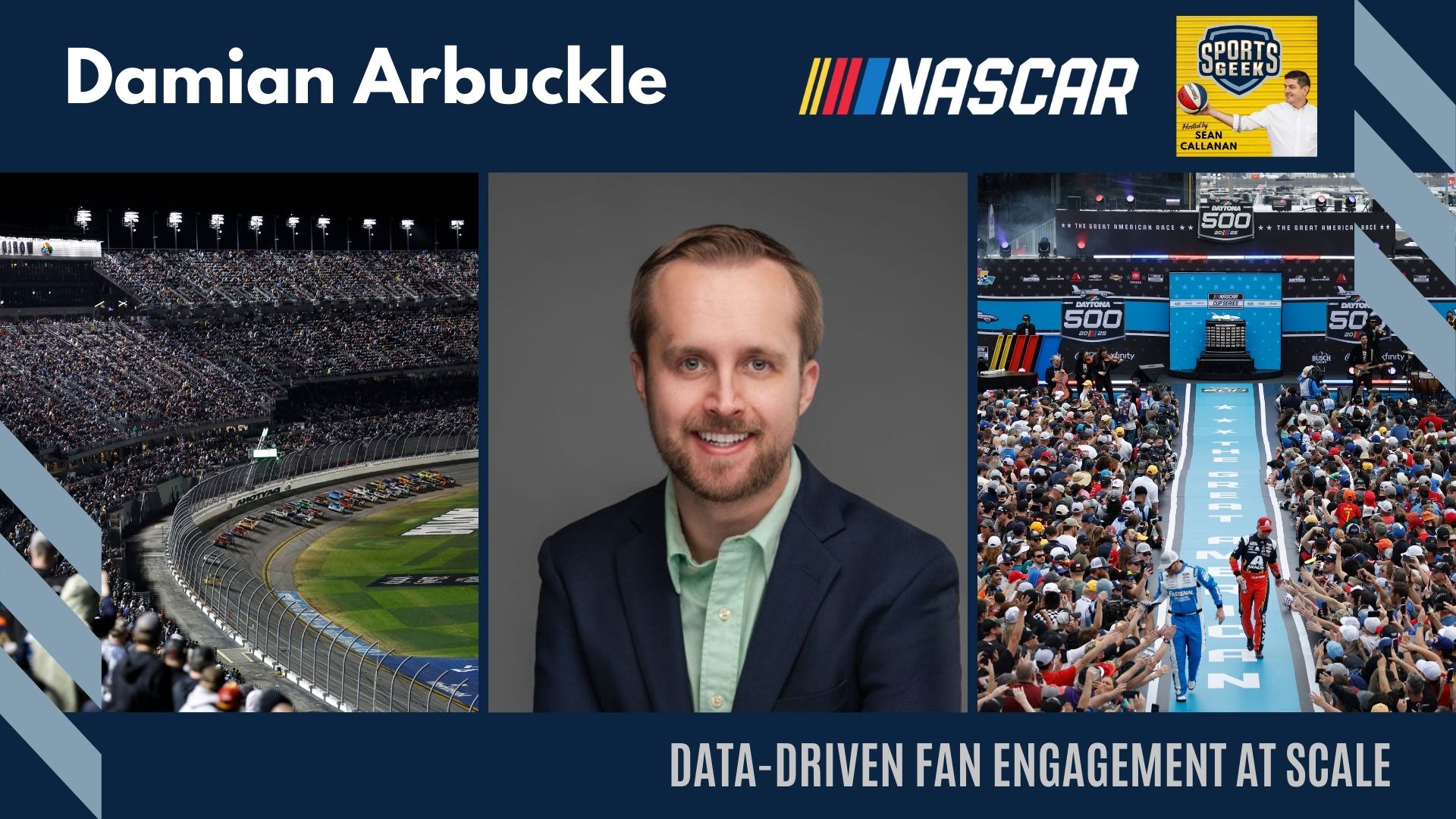
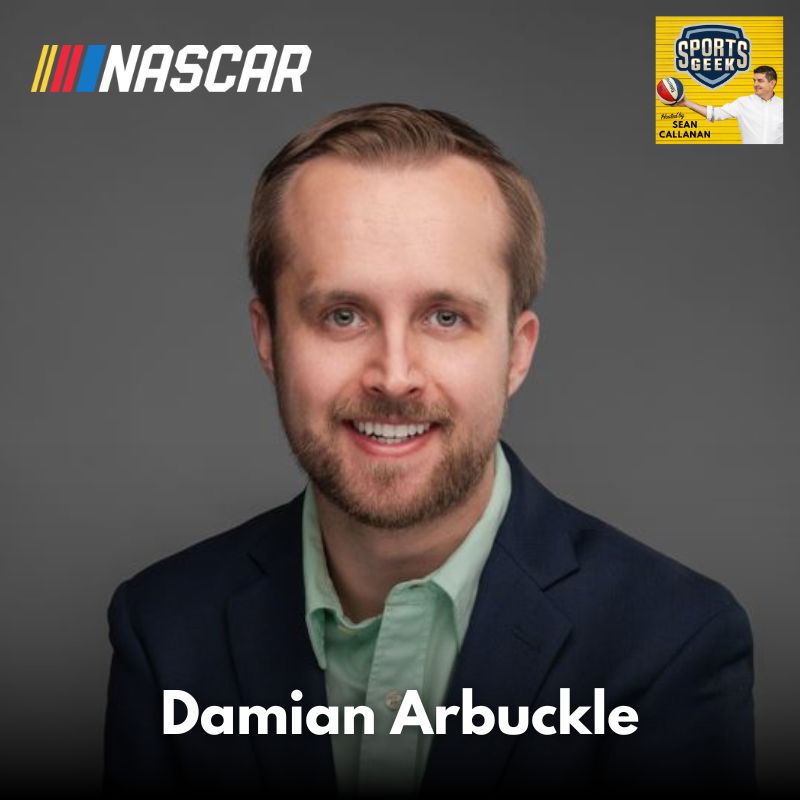
In episode 439 of Sports Geek, Damian Arbuckle brings seven years of NASCAR consumer intelligence experience to share insights on building data analytics capabilities that drive real business outcomes across multiple properties.
In this conversation, you'll discover:
- How NASCAR’s Seat Quality Index model uses historical data and machine learning to optimise pricing decisions across 15 different tracks and varying race conditions
- Why translating complex data insights into actionable English is just as critical as technical analytics skills when building organisational buy-in
- Essential strategies for cleaning and structuring ticketing data when inheriting messy systems—and how discovering a “SpongeBob SquarePants 400” helped reveal data quality issues
- How NASCAR segments customers into lifecycle stages (prospects, first-time buyers, lapsed fans, loyalists) to deliver personalised messaging that drives ticket renewals
- Practical approaches to building track-by-track relationships with “data champions” who can implement insights and create internal momentum for analytics initiatives
- Why understanding the difference between new and renewed ticket buyers challenged NASCAR’s long-held assumptions and reshaped their acquisition strategy
- How motorsport’s unique multi-day festival atmosphere—from live music to driver appearances—creates opportunities to enhance the live experience beyond just the racing
This episode is essential listening for sports business professionals building analytics capabilities, implementing dynamic pricing strategies, or developing sophisticated fan engagement programs. Whether you're working at a single venue or managing consumer intelligence across multiple properties, Damian's practical insights on translating data into actionable business outcomes will help you drive measurable impact in your organisation.
Listen to Damian Arbuckle on Sports Geek
Can't see podcast player? Click here to listen
Watch on YouTube
Interview Transcript
This transcript has been transcribed by Riverside.fm, no edits (please excuse any errors)
Sean Callanan (00:01.314)
Very happy to welcome Damian Arbuckle. He's the Senior Director of Consumer Intelligence at NASCAR. Damian, welcome to the podcast.
Damian Arbuckle (00:09.753)
Awesome, thanks for having me, Sean. Looking forward to it.
Sean Callanan (00:12.596)
Not a problem at all. I always want to understand people's sports business origin story, how they got in the world of sports business, but then how they got into their roles. So we'll start with the first part. How about yourself? How did you find yourself in the world of sports business?
Damian Arbuckle (00:26.543)
Yeah, growing up, knew I wanted to always work in sports. Being from Philadelphia, I thought I wanted to work in baseball with the Phillies and got a job with the Clearwater Threshers selling tickets. And I realized I didn't want to just sell tickets. I wanted to do something beyond that. And I was able to get a little bit into the Firestone Grand Prix at St. Petersburg. And after that, undergrad was wrapping up and I realized I still wanted to go to graduate school. And this whole data analytics thing was coming to fruition at that time.
and I was able to get into the University of South Florida and really get my start in the analytics realm at the Hard Rock Casino in Tampa, Florida.
Sean Callanan (01:02.584)
So the Hard Rock Casino, I mean, I've been lucky enough to talk to people who've been in sports and then worked in the casino and the gaming realm. And there's similarities, but there's also, you know, they really sweat every dollar and they really sweat all the data on the casino and the gaming front. So it must've been a really good, I guess, apprenticeship to really understand the value of data and I guess converting data into dollars.
Damian Arbuckle (01:23.887)
Yeah, there's a reason why the casino always wins. There's a lot of data involved, but it was very cool to see how that is used across the entire company. So whether that's in marketing, sales, player development at the time at the casino, it was really cool just to understand how were things working, being able to identify certain customers that may be willing to spend a little bit more money with us, being able to look at where does a machine on a certain floor.
If we move that machine to another location, how well does that machine do? Uh, you know, and just all sorts of random little things at the hard rock casino that I had no idea about, uh, growing up. And then it really kind of got my star, my, my evolve into the data analytics realm. And, know, from there, I was just able to kind of meet as many people as possible. I mean, it's what a lot of, uh, you know, younger adults are trying to do. I just meet as many people in the industry and lo and behold, I knew a guy that that knew a guy that knew a guy that knew there was opening here at NASCAR.
And seven years later, I'm still here.
Sean Callanan (02:22.446)
Well, that's terrific. mean, the first thing you know, I, you know, there is a lot of grads ago, I want to work in sports with that really wide remit, but not know one that there's so many different parts of sports, like you've, you know, you've said operations and ticketing and, and data and those kinds of things. How did you like, how did you find yourself in the, you know, the data analytics space? Was it something that came naturally? Was it just, you got put on a project, you know, the, at the Hard Rock Casino, and you said, this is something I really like to do. was, was it
You know, your skills suited for it, or is it something you liked?
Damian Arbuckle (02:55.793)
You know, it's funny, I think I look back on it and being from Philadelphia at the time, the Philadelphia 76ers were famously tanking and there was a lot of analytics and data that were involved with it. I kept reading about it in the news and that's kind of where I exactly trust the process for sure. Unfortunately, it hasn't worked out exactly the way they hoped. But that's kind of where I first started. Like, what is this data analytics thing? How can I apply this?
Sean Callanan (03:08.862)
The trust the process era.
Damian Arbuckle (03:21.365)
And just being able to then take that. And it was, I think, a project, an undergrad where I just did some research on it. And then I was lucky enough to know somebody at the Hard Rock Casino that just started working analytics and said, Hey, I got an internship. Why don't you try it out? And just being able to dive into the code, working through the numbers and being able to present that and being able to turn, you know, mathematics into English basically, and all these insights into English for people to understand. It may not be as familiar with the data and how it works.
But again, taking those actual insights and then seeing how that affects the company and seeing the positives that are around it really just kind of makes you feel fulfilled and bring fruition to your role.
Sean Callanan (04:02.06)
I mean, that piece there, you know, me as a former geek, I still think I can geek a little bit, but you know, one of my key skills was be able to translate that IT solution into, like I said, into English, you know, that being able to talk to the business folk and help them understand it. Do you think that's just as important for you as your math skills as be able to break down big pieces of data and write some code, but that explaining what that stat or what that figure means?
Damian Arbuckle (04:30.071)
Absolutely. That's one of the key attributes to any analyst that I'm looking to work with, looking to hire is being able to convert whatever you found and turn it into something for the company. I've worked with some really, really smart people. I've been lucky enough to work with them and they know all the code in the world. They know how to build every single model in the world, but then they don't know how to tell marketing and sales and then whoever to how to go activate on it. And so that's always the biggest key is being able to take whatever you find.
And I'm not in position to go really implement that, but I'm in position to go tell other departments how to go implement it and then work with them on implementing that process.
Sean Callanan (05:09.134)
Absolutely. a, it's a, it's almost a running joke here on the podcast when I'm talking to data and CRM and intelligence folks that if we're all on a journey, like we haven't got to the destination, but we're always, always going there. If you take back seven years when you first started as an analyst at NASCAR, what's, what's that? What's that? How's that journey evolve? What was it like back then to sort of how you've got to where you are now?
Damian Arbuckle (05:32.497)
Yeah, I was probably the first analyst that NASCAR hired in a role like this, where I was able to dive into a data warehouse and just see what was going on with ticketing. And really the data wasn't even clean yet. I remember there was the SpongeBob SquarePants 400 at Kansas Motor Speedway. And I was like, I don't know what that is or when that event was. So just having someone diving in and seeing what I could pull out of it was just very key for NASCAR. I realized like,
Sean Callanan (05:43.374)
Mm-hmm.
Damian Arbuckle (06:02.033)
Okay, I can affect the business in so many different ways and being able to identify that that top way that I can affect it. And really just diving into it was just our ticketing data at the very beginning and just seeing what's a new customer buying versus a renewed customer. And there was just some, some tidbits in there that was like, wow, new customer, they're not doing what we thought they were doing all these years. And it's, you know, how do we just evolve that? But yeah, it's turned into so much more over these seven years.
I really thought it was going to be two years and I'm moving on to something else. And sure enough, we've evolved so much over these seven to eight years.
Sean Callanan (06:36.066)
I mean, I think that I guess that common look, you know, is that that big data, like you've got all this data, where do I, where do I start? But you really have to narrow your focus. I will, I could look at everything, but really I just need to look at one thing, you know, ticketing and ticketing works because if you make, if you, if you move the needle there, brings in revenue. People go tick. Damien's doing a good job. That insight gave us some more, more money. So is it that case of building on those wins, you know, converting that, getting that data.
messaging that back to the business, making them make a decision, see that decision, have a result. Then they came back to you and say, what's the next thing or what's the next insight?
Damian Arbuckle (07:12.241)
Yeah, absolutely. And I'm lucky enough to be in position where we now own 15 tracks across the country. So I get to work with all the different tracks and, uh, you know, maybe I find something on one track and I'm able to show and implement that. And I got 14 other tracks knocking on the door, you know, asking me to help them out. So that's definitely what it was. It was just finding that one little tidbit and working here in Daytona, uh, being right across the street from the track was able to build a relationship with that track and help that.
them involved and then all of sudden it was, okay, we've done this for Daytona, what else can we do across the country for all these other tracks? And I'm always looking for that data champion, I would say, in the company and being able to kind of utilize that person where they'll pretty much take anything that I can give them. But again, I got to sit down and say, okay, this is the top three things that should pertain to you. Let's run with them and see what we can do.
Sean Callanan (08:02.83)
So those who don't know, and you sort of started teasing it there, like NASCAR, like how do you explain NASCAR? Cause it's, you know, it's, runs a series. It's sort of like a league, but it's more track-based. like what does NASCAR as the, as the, as the body do for the overall series?
Damian Arbuckle (08:20.913)
Yeah, so I'm always looking to kind of compare my job to other sports members around the country. And really, I like to say that I work for the league, but we also own 15 franchises around the country as well. So I get to do some league implementations, like working on our fan rewards platform or our fantasy platforms and helping to evolve those games that we're running.
Sean Callanan (08:34.424)
Mm-hmm.
Damian Arbuckle (08:45.521)
But then also being able to go take it to the tracks and say, okay, how do we sell that local partnership? How do we increase our ticket price in some areas? How do we grow the fan base and get more people to come out to the event? So I'm able to compare to other folks around the industry and say, okay, you work for the team. Well, this is what I'm doing for, know, Talladega Super Speedway. And then, oh, you work for the NBA. This is what I'm doing for NASCAR. And so it's always an entertaining revolving door about what I'm working on.
Luckily right now it's the off season, so it's a little bit slower for me. But definitely with the schedule going from February to November, it's quite the long season and quite a lot of work to be done. But yeah, it's a very unique role. And I did mention too that we actually own our Emsis series as well, which is our sports and doors series. And they do things like a 24 hour race here in Daytona. And it's a way different crowd. If you go to that event versus a NASCAR race, we're selling to a lot of different people.
So it's really kind of rethinking what we've done for NASCAR and how do we help out that series as well and how do we get them to grow across the country.
Sean Callanan (09:50.146)
Yeah, absolutely. mean, it was like enough to have Matt Vincent on the podcast way back in episode 298. And again, he sort of spoke about the idea of being a track marketer and marketing, you know, marketing, Daytona, and then working in NASCAR and helping multiple tracks. So it's, it is like you're a, you're an event partner, you're managing the event, you're also running, know, you're helping run the event, but also giving that shared services league type of thing with things like fantasy and reward. So it must provide a lot of variety in what you need to do.
Damian Arbuckle (10:20.581)
Yeah, it's funny that you bring Matt up. think Matt was one of the first people that I got to work with all those years ago at NASCAR, just being able to work with some of the Daytona staff and showing him and others just a little bit about where our fans were coming from. I we really didn't even know that at the point when I started. And just being able to show, okay, your top five DMAs are this, let's go spend the dollars in that area. And just kind of evolving from there, we're much more sophisticated, much more advanced nowadays, but.
But yeah, it was great to work with Matt and a few others there in Daytona.
Sean Callanan (10:51.318)
And so what's the goal or what's the remit of the, I guess, consumer intelligence department?
Damian Arbuckle (10:56.965)
Yeah, so I think our goal right now is to get the right message to the right person through the right channel. And it's a easier or lot harder than easier said than done. And, you know, we we do things like how do we get the right audience to our outbound team? We have over 80 person sales staff that works with all these tracks across the country. So how are we making sure they're calling the right people? How to make sure we're emailing the right people, you know, push notifications, SMS, wherever we're buying advertisements.
How do make sure we have that right audience and, and, know, shrinking our, our, our CPAs a little bit and making sure that we're hitting our sales goals as well, whether that be through, you know, certain amount of units that we want to sell certain amount of revenue. You know, NASCAR is like a, sporting event, the music festival combined. have people that come out and camp for the whole week and that's a way different customer than, you know, someone buying two tickets at on Sunday morning and then coming out to the race. So it's quite the exuberant amount of.
work that we have to do, but it allows me just to relate to all these other people in the sports industry, which is a great part.
Sean Callanan (12:01.73)
And that sort of touches on the presentation you did at SEAT, sort of tackling the life cycle of a NASCAR fan. And it's great when you go to a conference and you see someone's got a shiny slide of here, how it is. That project's obviously started as a drawing on the whiteboard. How did it go from that to that full execution piece?
Damian Arbuckle (12:27.377)
Yeah, it did. It was a lot of work for sure. It was one of those things where we started out small and was like, okay, we have this path and then we have this other path. And we had all these different ideas and it was okay, how do we bring this all together? And then a few years ago, I actually worked for International Speedway Corporation, which was owned by NASCAR and bought by NASCAR. So now it can just help you buy work for NASCAR, which is great. But at the time we were just focused on ticketing and then that,
Kurt Ball came in and it's like, okay, now we've got to focus on the whole league in general. So how do we make sure, you know, we are marketing people 365 days a year and keeping their interests because we only race, you know, 35 weekends a year. you know, there, there's people only come out to one or two events a year. So how do we get you to interact with the NASCAR brand for the rest of the 364 days? And so it was just kind of sitting back down and saying, okay, we've always done the process of let's go renew people. Let's go get the new sales. Let's go.
people that didn't renew to go target them. But then how do we evolve this NASCAR brand and see where people interacting with, whether it's the app, our website, again, the fantasy and fan rewards angles as well. And how do we just create that advocacy for our fans and again, making sure that they're interacting and growing their love for NASCAR.
Sean Callanan (13:45.26)
And so was that again, sort of picking certain paths in that life cycle and saying, we want to make sure that path is right. Someone attends for the first time. What does that path look like? And sort of solidify that and then sort of then move on to the next. it's again, it's a really overwhelming task when you say, he's all of our fans and here's how we can interact with all of them. How did you sort of, I guess, have a phased approach to, to, getting that system up and running.
Damian Arbuckle (14:14.085)
Yeah, I think you talked about earlier too of looking at ticketing data, being able to show how much revenue we brought in. It's kind of identifying those areas in data analytics. It's very hard to put a dollar amount on what we do, but for some of those things like, we sold 10 extra more tickets because we did this data analytics thing. It's easy to get that to apply that revenue and see what we're doing. So it was kind of picking and choosing a little bit about, you where can we show the company that we're making that impact on our revenue side of things? Cause we know there's other things that we can help.
impact the business, that's going to be a lot harder to attribute that dollar amount to. But looking at that first and just being able to predict kind of the impact and seeing once we got our database, it's, okay, we have all these customers that came three years ago. And if we can get, you know, 2 % of these people to come back, that equals X amount of dollars because we will see what they've spent in the past too. So it's kind of being able to show the company, okay, this is what we think we can do by taking this route.
and giving them an estimate of the revenue wise and just showing the return on investment at end of it.
Sean Callanan (15:15.488)
And in that space was it, what are some of the tools and the tech stack that helped you, I guess, implement that? Because again, from whiteboard to execution, you we've all seen the martech stack that just keeps adding and adding more tools. What are some of the tools that you've been able to use to have some success with that?
Damian Arbuckle (15:32.645)
Yeah, definitely. We were just trying to identify a database first and we were able to bring in Snowflake as our partner a few years ago and it's been a great partnership and that's where we house all of our data today. So we've identified over 70 to 80 data sources. I would say we have connected now coming into our data warehouse and I have that data at my fingertips to be able to use wherever I want to go.
And so being able to work with Snowflake to kind of build that one centralized view, which I think a lot of teams, a lot of franchises are looking to build and seeing how people are interacting with. But then it's also how do we activate on that data? It's, you know, making Tableau reports and just being able to present to the business what's going on with our customers. But then being able to take that audience and say, okay, how do we send them an email? How do we give them to Sales Academy to make a phone call? And
I would say a lot of teams probably use Excel to do this and then manually upload it, but we make over 2,000 audiences a year. And that's a lot of Excel documents flying around that we're just getting, just make mistakes were happening on the Excel file, we're targeting the wrong folks. And so we use a tool called Growth Loop today to be able to pass over all of our data within minutes. And so we've gone from hours, if not weeks, of making audiences to…
15 minutes maybe at most. So just being able to interact and activate on that data quickly.
Sean Callanan (17:00.94)
And so that's either like SMS messaging or personalized emails, those kinds of things to effectively you're trying to arm your markers with here's some of these audiences and tools to be able to hit them up with that right offer.
Damian Arbuckle (17:14.321)
Absolutely. it's, you know, we calculate things like how long have you been coming to the racetrack? So we know if you're making the purchase for the first time and we know it's X amount of times harder to get you to come out the second time. So we may focus a little bit more on you as a customer. But we know if we get you out year two and year three, you're extremely likely to come back for four, five and six. So we're really focused on, you know, obviously getting new customers and getting them come back for year two and especially year three. And once we have you.
coming back, it's nine times out of 10, if not more, you're coming back for year four. And it's just kind of being able to identify the right customer and making sure they're getting hit. If there's a certain discount we want to send out, making sure we're targeting the right customers. We're trying to also predict how much money you're going to spend with us. And this is where I got from my casino days. The casino is very good at predicting how much money you're going to spend with them. Yeah. It depends on how fast you're playing the game.
Now, you know, game you're playing. So there's all these types of data points that we're able to collect. And now we can predict and say, okay, I think Damien's going to spend X amount of dollars with us over the next three years. And, know, we may take our top 10 % on that model and say, okay, let's go target these 10 % and really focus our money on these folks instead of focusing on someone where, okay, they bought a ticket. That's great. But we know they traveled from a thousand miles away and the odds of getting that person to come back.
for years two and three is probably not great, but we'll still focus on them to grow that NASCAR fandom, not necessarily to sell it to.
Sean Callanan (18:49.186)
And is that more of a, mean, I saw you sort of getting into that lifetime value of a fan piece, but also, you know, it's a different way of, I guess, valuing, you know, those transactions. It's not as simple as we sent out this ticketing link and we made the, we made these sales, but it's, Hey, this, if we target this audience segment, we, you know, here's the prediction, but here's what we actually did. Is that sort of how, I guess the, the pitch back to the business and sort of showing your value.
has changed from a, know, here's the number of paper tickets we've sold to here's the longer term relationship we're having with our customers.
Damian Arbuckle (19:25.697)
Absolutely. And that's kind of where the NASCAR brand thing comes into play too. It's one of those things of like, if you sign up for fan rewards, we know your X amount of time, so more likely to spend money with us, right? Or if you play fantasy, we get you to keep playing fantasy. If you download our app, there's a couple of different fantasy games on there. you know, being able to get you on three out of the four fantasy games, we know, okay, you're more likely to spend money with us. So it's not just all about ticketing at the end of the day. And that attribution piece is…
Sean Callanan (19:43.374)
Mm-hmm.
Damian Arbuckle (19:54.021)
Really the main focus of my goals for 2026 is honing on the right attribution model. There's tons of them out there. hear all the time of last touch, linear, first touch. There's all these different ways of looking at it. And it's kind of being able to decide what's that best attribution model. We may change it from track to track, event to event, but that's kind of where my team's focused on in helping to grow that performance marketing part of the business.
Sean Callanan (20:03.587)
Mm-hmm.
Sean Callanan (20:20.558)
I mean, that was my next question. it really important to you? And I guess important advice for people in the data space to, I guess, know, follow the money, like know where the money is going to be because that's where, you know, that's where the work gets approved. That's where people want you to continue to work to be able to say, well, if I've done this either research or deep dive into this data, I can start providing some either valuable audiences or bringing more money or prove that, hey, the things that we are doing are driving results.
Damian Arbuckle (20:49.071)
Yeah, at the end of the day, you need to kind of prove what you're doing, right? The folks upstairs are always busy and you need to understand that, hey, they've spent maybe seven figures at some point to get us up and running. So how do we show them that we've gotten that money back and then some? But definitely the attribution piece is going to be the key. think there's so many different ways we can target our audience. I I don't know, what we see, 100 plus advertisements a day without even knowing.
Instead of just looking at who clicked on that link and then who made a purchase, we're trying to evolve that and say, okay, how many touch points did you see? Because we're seeing you may need eight touch points before you actually make that purchase. And so how do we get in front of you and not be overbearing, but making sure that message is hitting you in these right areas, whether it's through social targeting, do things like through the Roku TV, certain advertisements, how we interact with you those ways.
Sean Callanan (21:26.883)
Mm-hmm.
Damian Arbuckle (21:45.795)
and getting into that seven, eight touch points in a strategic way. And then we know, okay, we've been served 10 ads and you still haven't purchased. We know you're very less lucky for that 11th or 12th. So let's just stop spending our money on you and try to go either some other route with you or just push that money to somebody.
Sean Callanan (22:04.118)
And is that a, I guess a process that you're working with the marketing team because you know, there's varying channels, know, Meta will roll out a new algorithm and all the ads change the way they're running and Google will be the same or all these other new platforms you're talking about, whether it's, know, Roku and smart TVs and outdoor, like how do you, I guess, help the marketers to know, sorry, we don't have that home run campaign. We can't just hit a button on one platform and just get all the…
get all the pieces, we've all had that conversation, oh, please blast this out to everybody and it'll solve our problems. How did that, I guess, conversation evolve to say, you know, our data says we need to, someone needs to know about this event six times in the six weeks prior to event to help the sale. And so you have that round, well-rounded, I guess, marketing effort.
Damian Arbuckle (22:51.365)
Yeah, luckily we, once we get the database going, we're able to bring in all this historical data. So I have sales, you know, back 20 plus years from now, and I have email interactions from almost 10 years ago. And so I can show the marketers and say, okay, we've been blasting people for, years, and this is the results. And then like I talked about earlier, once I get that one or two tracks on my side to say, okay, let's segment down and do a smaller audience and try a different offer instead. I can show that either be.
done the same exact results or nine times out of 10, we did better. so, you know, it's kind of like going and sitting down at a casino table and then already know what card's coming up next. And, you know, the models that we have, we're right nine times out of 10. Every once in a while we are wrong and they'll let me know it, but, you know, just knowing that, okay, the odds are on my side, all this hard work that we've done, we know mathematically that this is going to work more likely than not. Let's go down this route and just being able to, again, take that
Sean Callanan (23:24.557)
Yeah.
Damian Arbuckle (23:50.447)
that data champion of that track and say, okay, we've worked with them on this. Let's go do this for the across the country.
Sean Callanan (23:57.135)
Are there particular tracks that effectively put their hand up to be the, the, the Guinea pig or Hey, we want to be testing new stuff. And they're really at the forefront to say, you know, what's the latest, how should we do it? And then there's others that are sort of looking over and will only sort of follow if, if some of those leading tracks sort of take the way.
Damian Arbuckle (24:16.165)
Yeah, I don't know what it is, but there's always, we're at 15 tracks, there's always five tracks that really want to do whatever idea I have. There's always five that are like, maybe, maybe not. And then there's five that don't want to do it. And it doesn't matter, it rotates, but track is what wants to do it. But yes, I usually find those couple of tracks are like, okay, you know, and two, sometimes people really want to do whatever I'm trying to, but it may not make sense for that track and it may not be the biggest impact. So I kind of have to say, okay,
work with you, but it's not going to be what this is. And it's always a tough conversation. But new events too, like we're racing at the Naval Base in San Diego in 2026. It's going to be a spectacular event. And it's how do we shift sales or shift resources, I should say, to that event. And while the popularity is great, there's pros and cons to all the events happening around it. We race across the country. We have races in Phoenix.
a couple races in California area as well. it's being able to see, okay, this person didn't renew their ticket at Phoenix, but they went to San Diego. So we know they're still a fan and we know we still should be marketing to them, but now we can see, okay, we've actually taken X amount of people from Phoenix. We moved them to San Diego. How do we really fill those seats to Phoenix?
Sean Callanan (25:34.671)
And I mean, it must be real, both the challenge and opportunity, because it's not like, you know, to take a traditional sport, you know, stick and ball type of the sport where we're always at the same stadium and we're always talking to our own market. You know, you're doing local marketing for around all of your tracks. But again, they're only got their one or they're only a couple of years. So it's, you know, it's really event driven marketing. So it's a, it's good. And then it's getting that mix right to be able to keep them engaged.
you know, whether they're following the other races, but then coming to their local event, is that sort of one of the, I guess, the challenges that you've got in engaging like the NASCAR fan?
Damian Arbuckle (26:13.999)
Yes, it definitely is a huge challenge. like a lot of these tracks, they may have one event weekend throughout the year. So we really got to make sure it's correct and it's done correctly and fans have a good time. And if an event, you know, rains out or gets delayed, usually our scores are a little bit worse than those surveys and how do we get to, you know, spend a little bit more time to get people to come out the following year. But even tracks like Phoenix, for example, they race in the spring and then also the fall.
Well, in the spring, you got a lot of snowbirds down. We actually see a correlation with the spring training teams in baseball. So we know that, okay, these, you know, what 10, 15 teams play in Phoenix for spring training. We actually see those DMAs. We sell more tickets for the spring event than our fall championship event from those DMAs. That's because people are in town. Same thing for Daytona 500. It's in February. There's a lot of snowbirds down here. It's obviously our marquee event in draw from all over the world.
Sean Callanan (26:48.887)
Okay, yep.
Damian Arbuckle (27:09.915)
But then we also race here in August and that's hugely localized event. A lot of people here in Daytona know that the tickets for the 500 are going to be a lot more expensive than the Coke Zero Sugar 400 in August. So they're going to come to the event in August instead. So it's all those unique aspects around the track and some tracks have one event, some tracks unfortunately may lose their event and then come back the following year. So it's all sorts of different challenges that we get for each race.
Sean Callanan (27:40.11)
Absolutely. As we've mentioned a couple of times, you're at-seat and presented at-seat and I wanted to check in. How did you find one connecting with your data and BI colleagues in Nashville?
Damian Arbuckle (27:53.649)
Yeah, it was a great opportunity. I think we had seed at Daytona, I don't know, back in like 2018. Yeah, it might've been 2019. I know I still have the book somewhere, but yeah, it was a long time since I was actually at seed. I was really impressed with the folks that were there. It was great to start meeting everybody. I got to see a few old friends as well. But like I said, I'm in that unique spot where I can relate to a franchise and also relate to the league as well.
Sean Callanan (27:59.618)
2018, 2019, I think it might've been.
Damian Arbuckle (28:23.025)
And some of the conversations that we just had, even after presenting, I was shocked with how many people were coming up to me afterwards and just willing to pick my brain and just talk about anything, especially around the data analytics realm. And I think Seed's great too, because you get to choose, right? I don't have to go to the data analytics session every single time. I can go see what's up with sponsorship, what's up with the digital activation world or technology world, and hear what they're talking about too. So it kind of gets you involved more than just the data analytics.
Sean Callanan (28:51.726)
Absolutely. the thing is, you know, you're all data. you know, it's all about what the data is telling you, you're all selling tickets, they're different. Like, so there's lots of similarities. And it's just, you know, and then it becomes, oh, how are you using Snowflake? Oh, what's the automation you're using? Or how are you sending, you know, if somebody gets really technical, it's like, how are you doing that email? And sometimes, you know, you come away with, hey, that's the solution I've been looking for. And it might come from someone from the Oklahoma City Thunder or
or a minor league baseball team.
Damian Arbuckle (29:22.415)
Yeah, it's great to just hear everybody's challenges and what they've accomplished. And like you said, there's sometimes you hear somebody like, man, I really want to go do that. Or I've been trying to figure it out for two years. How did you do that? And then there's the year sometimes too where you hear about a problem and I'm like, I saw that two years ago. Okay, we're not as far behind in that realm of things as I thought we were. So it's always great to just meet with some like-minded folks and see where people are at.
Sean Callanan (29:44.056)
Yeah.
Sean Callanan (29:48.757)
Absolutely. So I wanted to ask you what's, you know, what's it you talk about races in San Diego and new tracks and new cities? What excites you around your consumer intelligence team for the next 18 months?
Damian Arbuckle (30:06.245)
Yeah, it's really fun to do some of these new events like San Diego. get asked about it probably two to three years in advance of the race actually happening. So it's one of these cool aspects where, you know, I don't get told all the details, but I get asked, hey, what's up with that city? How are we doing in that area? Right. And now in being here for so long, I can kind of understand, they're coming to me. They're really serious about this city. There's been some…
really interesting projects that I've been able to work on that, you know, haven't come to fruition some things, but then there's things like the San Diego street race and the Chicago street race that we had a few years ago. being able to see those things come to fruition, it's just really cool. And I think NASCAR has a lot of really interesting ideas. There's obviously a lot of things behind taking a NASCAR race to wherever we want to go next. You know, we raced in Mexico city last year, and then improve that a concept and really.
After that, it's kind of like, where else can we go next? And so it's quite interesting, some of the ideas I get to hear about, and super excited to see how the calendar evolves over the next few years.
Sean Callanan (31:13.324)
Absolutely. mean, the good thing is, you know, if you go back seven years ago, at least now you've got a better understanding of the data and you can actually say, we, you know, we have got a whole bunch of people that travel from that area that are going, or there's a whole bunch of people that are following on our site that have never been because it's not geographically closed. So at least you've got more data to be able to answer some of those questions that might be thrown at you.
Damian Arbuckle (31:37.329)
Yeah, it's really interesting things like, um, you know, when we started racing at Chicago, there was a couple of States in the Northwest that was sticking out. That was like, well, people are traveling from, you Oregon, Washington, Idaho. Uh, you know, it's like, wow, like I wouldn't have expected that for Chicago, but since it's such a big event, we're getting that draw. And then we can see, okay, you know, maybe we have a city that doesn't have that big of a draw, but there's a track in the area that we think we can go race on.
and go test out some concepts of things. And you'll see like, know, RXfinity and Truck Events, which are our lower series, may go race at a different track than our Cup series, because we're trying to, you know, prove out a point. How does this track work? How does our cars race on that track? Logistically, are we able to fit everything in? You know, we got about 40 cars on track and all these different teams. It's double the amount of cars that F1 has. And so we need more space, you know, and it's just kind of figuring out those logistical areas.
And again, kind of proving out like, okay, it worked. Now let's bring the cup series out.
Sean Callanan (32:37.918)
You mentioned F1. A lot of people might put NASCAR into the same bucket of, these are people are motorsport fans. What does the data tell you about NASCAR fans that maybe break some of those ideas?
Damian Arbuckle (32:58.501)
Yeah, there's some folks that are all motorsports fans. mean, there's some folks that will follow IndyCar, F1, NASCAR, anything that they can watch that's on wheels, that's racing, they'll watch it. And then there's some folks where they're just strictly NASCAR or strictly F1. And myself, I'm a NASCAR fan, I'm an F1 fan. It's great to kind of see the difference of it. And some of our events like our Chicago Street Race draws a higher end crowd, more like an F1 crowd.
and then there's some events that are just, you know, we've been racing there for years and you're going to get that typical NASCAR crowd that's coming out. that, you know, each track is a little bit different. it's great to seeing kind of, you know, the motor sports realm, I would say, since I've started working here, it's just evolved. You know, the popularity F1 is it's definitely taken off, but it also has helped us immensely too. Cause people are like, okay, motor sports, you know, like I've liked this F1 thing, but obviously they race all over the country or sorry, all over the world. So.
we have that kind of NASCAR aspect of, okay, now I'm go check out a race and go see what NASCAR is all about. And same thing, vice versa, right? Someone may go to Daytona and then there's the F1 race here in Miami and usually in the spring as well. So I would say, you know, we kind of play off each other a little bit. Obviously we don't wanna be in the same market at the same time, but it's great to kind of just see how all these different motor sports realms, you know, kind of help us take off.
Sean Callanan (34:22.892)
And is there a, I mean, a similar trend that we're seeing in pro sports that fans will follow an athlete and sort of seeing the same in, you know, motorsport. Well, yes, they might be a follower of a team, but they'd more likely start following the athlete and what the athlete is doing. And they're following the driver. Are you sort of seeing that same correlation? You've either got people who follow the sport, follow the driver, or they're just the event fan. Like, the events in my part of the world, I'm going to go to it. Are they sort of the, some of the different personas you have?
Damian Arbuckle (34:52.441)
Yeah, definitely the driver is the biggest part. And it's the one thing that I can't fix in this realm of NASCAR. But when people lose their favorite driver, they tend to not come back right away. We've seen things like Jimmy Johnson recently retiring. But now I have the data to say, OK, this is where Jimmy Johnson fans mostly live. This is the tracks around that area that we think are going to be most affected.
How do we budget accordingly and how do we identify these folks and get them to come out? So it's really that affinity for the driver. There's certainly affinity for teams. but, mainly it's really for that driver. And we've had a lot of great, athletes over the years and a lot of guys have been racing for quite a long time. And, know, we have an idea, you know, who's going to retire sooner as opposed to later. And now I can go into the database and say, okay, you know, I don't know who's retiring next, but let's say all these Kyle Bush fans.
uh, you know, maybe on the brink of not coming back, how do we get that, get ahead of this and say, okay, let's go win some of these folks back and get them to come out and get them to have affinity for a new driver, whether it's the same guy in the, or a new guy in the same car or a new driver that's out.
Sean Callanan (36:03.986)
I mean, that data is really important for that storytelling piece, how your content teams are telling the stories, how they're lifting up new drivers, helping build new fans through those new drivers, sort of is an important part of the process.
Damian Arbuckle (36:16.389)
Yeah. And that's some of these key marquee events too, like San Diego. We'll probably see some, some guest drivers out there. mean, at the Chicago street race, had Jimmy Johnson racing, you know, sometimes even Dale Earnhardt Jr. races too. So we can go back and see who's selected these guys in the past, whether it's through our app, through certain forums and being able to target those folks. And we've even had things like, think Kimi Raikkonen raced at Watkins Glen International Speedway a few years ago. And it was how do we go identify some folks that like F1 or.
Sean Callanan (36:32.322)
Mm-hmm.
Damian Arbuckle (36:46.033)
like Kimi Raikkonen, right? And being able to take these driver appearances and use that to bring in a little bit of additional revenue to some of these events.
Sean Callanan (36:46.157)
Yep.
Sean Callanan (36:55.086)
Absolutely. Well, Damien, really do appreciate you taking the time. I want to get to the sports get closing five. Do you remember the first sports event you ever attended?
Damian Arbuckle (37:05.585)
I don't remember it because I was less than one year old, but I did apparently go to the Rose Bowl. I did apparently go to the Rose Bowl game for Penn State, Oregon, a few days before I was one. So I have things that were from that event. I don't recall that event, but my dad was a season ticket holder for 30 some years there. So that naturally had to be the first event that I went.
Sean Callanan (37:08.994)
That's right, no one can Google it. No one can Google it, so.
Sean Callanan (37:31.727)
It's always good to find out when a dad takes their son or daughter to a game. I remember taking my daughter to a basketball game when she was literally months old and throwing her up during the wave and the whole crowd going, he going to catch the baby? And thankfully I caught the baby. The food scene has obviously evolved over the years and definitely would have done so at Daytona. I'm sure there's some amazing food at Daytona and NASCAR and the like.
Damian Arbuckle (37:45.035)
There you go.
Sean Callanan (37:59.567)
Do you have a favorite or a go-to favorite food memory or a go-to food at a sports event?
Damian Arbuckle (38:04.401)
I don't necessarily have a go-to food, but I do have a great memory. Luckily, I know someone that can get me second row seats at the Phillies games and we're on TV in the background sometimes and it's all you can eat. and my dad got caught eating a melted ice cream and the announcer is focused on him for a whole minute. So I still have that video of my phone of the announcers commenting him eating basically what was soup at that time. Cause it was July and a hundred degrees.
Sean Callanan (38:30.595)
Yep.
Damian Arbuckle (38:30.714)
and they were just watching a meat ice cream on the broadcast. This was before the pitch clock, so they had plenty of time to talk about them.
Sean Callanan (38:36.782)
Oh, if you get it in the right influence, you know, I do know influencers that do the lip syncing commentary with, you know, send me this stuff and we'll, can still make that video go viral again, if you would like, but it's always, that's a good food memory. What's the first app you open in the morning?
Damian Arbuckle (38:47.643)
Yeah.
Damian Arbuckle (38:54.481)
I would say it's either Twitter X or the ESPN app. Depends what time I go to bed. So if I miss some of the West Coast games and want to see what happened overnight, I'll go on the ESPN app. If I already know what happened and just want to check out some of the news, I'll go on.
Sean Callanan (39:08.672)
Not a problem. Is there someone that you follow? might be someone that you follow or a colleague or an author that the podcast listeners should give a follow on why.
Damian Arbuckle (39:17.413)
Yeah, think definitely Dr. Bill Sutton from the Vinnick program. University of South Florida has definitely affected my career greatly. Being able to be a student underneath him and just seeing what he's able to work on his career has definitely helped me out.
Sean Callanan (39:33.774)
Absolutely. And then lastly, and you can answer this both personally, and then maybe from a data and an intelligence point of view from an ASCA, but what social media platform is your MVP?
Damian Arbuckle (39:46.703)
I think I'm mostly on Instagram and Twitter. I don't really post anything, but I'm always on just seeing what's going on in the world. I guess from a data analytics realm, I think we're still using Meta quite a lot. Our fans are kind of that older generation still, so we're still getting quite a lot of good campaigns on Meta.
Sean Callanan (39:53.731)
Yep.
Sean Callanan (40:04.654)
Mr. Zuckerberg still got a lot of data and he's still moving a lot of traffic. And if you're in the world of paid and advertising, I'll say it like it's still the most effective. All the other platforms are still trying to copy what they do.
Damian Arbuckle (40:18.543)
Yeah, it's quite crazy how they got the hold on that area. yeah, I think they'll have NASCAR as their customer for quite some time.
Sean Callanan (40:28.526)
Absolutely. Well, Damien, I always ask listeners to reach out and say thank you if they enjoy the episode as much as I did. What is the best platform for people to reach out and say thanks?
Damian Arbuckle (40:40.261)
Yeah, think LinkedIn is definitely the best area. Always give me a day or two to respond, but definitely LinkedIn is probably the best spot to reach out to me.
Sean Callanan (40:47.598)
Well, not a problem. We will put a link to your LinkedIn in the show notes. Thank you very much for coming to the podcast and look forward to catching up soon.
Damian Arbuckle (40:56.785)
Yeah, I appreciate you having me. Have a good day.
Sean Callanan (41:00.655)
and I hit stop.

Turn 15 minutes a day into sponsorable content your partners will pay for
Sports Geek AI is a done-with-you content system that creates daily newsletters, podcasts, and social posts—giving your commercial team new inventory to sell.
Resources from the podcast
- Please connect with Damian Arbuckle on LinkedIn. Let him know you listened to the episode. Please say thank you if you do connect.
- Join me at SEAT in Charlotte in 2026
- Give our new Daily podcast a listen – Sports Geek Rapid Rundown.
- Related podcast episodes you should listen to:
- Throwback episodes you may have missed:
Podcast highlights
Highlights from episode 439 with Damian Arbuckle
- 03:00 – Discovering the path through the 76ers “Trust the Process” era
- 04:30 – Why translating data insights into English matters as much as technical skills
- 05:32 – The evolution from NASCAR’s first ticketing analyst to building consumer intelligence across 15 tracks
- 06:36 – The SpongeBob SquarePants 400 and cleaning the data warehouse
- 08:20 – How NASCAR operates as both a league and owner of 15 track “franchises”
- 10:15 – Machine learning models for dynamic pricing across different tracks and race conditions
- 14:45 – The complexity of multi-race pricing strategies and optimising revenue across an entire season
- 18:20 – Understanding NASCAR’s unique fan base within the broader motorsport landscape
- 21:40 – Why NASCAR tracks must compete for entertainment spend against concerts and other live experiences
- 24:15 – From prospects to first-time buyers to loyalists
- 27:30 – Focusing on attendance and actual fan experience
- 29:45 – The multi-day festival experience at NASCAR events with camping, concerts, and driver appearances
- 33:20 – How weather impacts attendance decisions and the challenge of outdoor events
- 35:10 – Creating premium experiences through driver appearances and international motorsport stars like Kimi Raikkonen
- 37:05 – Sports Geek Closing Five
Listen To Sports Geek
Recent Sports Geek Reads
- TikTok Teams with Olympics, Luka fan platform & AI Travel error
- No Bull Playbook, Frictionless fan experience & Claude MCP integration
- Wearables Banned, Social Media on Trial & Siri updates
- Super Bowl Ad Strategy, Bananas’ $1B Valuation & AO Influencers
- TikTok’s American Future, UFC Fighter Contracts & AI Power bill
- PTPA’s $1B Tennis Revamp, WNBA CBA & Dodgers spending
Listen to Sports Geek Rapid Rundown daily