In this Sports Geek Throwback episode, Sean Callanan interviews Sarah Styles from episode 385

Can't see podcast player? Click here to listen

Need a keynote speaker for your next event or conference?

Sean Callanan Speaks

Key Takeaways

In this Sports Geek Throwback, Sean and Sarah discusses:

  • Sarah reflects on the women's sport momentum behind the 2020 T20 World Cup final at the MCG, a night she describes as one hamstring away from a perfect game
  • Even in the five to six years before the final the work was not always easy, though the culture around it was always a good place to be
  • A big, bold target, a lighthouse on the hill, gave people something to rally behind even when some believed women's sport could not get any bigger
  • Meeting people where they are, rather than pretending they are somewhere else, helped get them engaged in what hosting the tournament could look like
  • AFLW, NRLW, Super Netball, Super W and results like rugby sevens at Rio created a rising tide that lifts all boats and led into the FIFA Women's World Cup

This transcript has been lightly edited by AI

Sean Callanan:
Must be pretty satisfying to then, like you mentioned before, to go to the MCG for a then record 86 ,000 people for a World T20 Cup final. For all the pushing and everything that happened to walk into that stadium, what was it like being the MCG on that night?

Sarah Styles:
Well, if you saw me, particularly after it finished, it was, I mean, I've described it before as it was one hamstring away from a perfect game. Cause obviously Elise Perry wasn't playing after I think ripping her hamstring off the bone. If you'd seen me in the, like, it was literally like, you know, single tear dripping down the face, kind of like this is, this is, I can't believe this has actually happened. Cause even in those sort of five to six years prior, it wasn't always easy. I should say culturally, it was always,

a really good place to be, but that doesn't automatically mean it was easy. But even when it was difficult to get people engaged with that change was possible, it was possible to get them engaged in this lighthouse on the hill, which is in 2020, we're going to be hosting this event and we want this to be a big deal, don't we? So even when people are like, you know, circuit 2015, 16, like, I think women's sports kind of is where it's up to and you know, it's just not going to get any bigger than that. You're like, okay, I can hear you. This is where you're at.

Because for me, there was a big part of how do you meet people where they're at? There's no point pretending they're somewhere else. You meet them where they're at. So it may not have been possible to get them, you know, with massive aspirations for the series that was just about to happen, but you could get them engaged with, well, we're hosting this. What do we want that to look like? And it sort of went from there. And I think the other thing is as well, like I said before, especially from that 2015 slot that

you know, got to the end of 2015, it's just been this game buster year. And then you're like, what about 2016? It's gonna be like, and it just went to a next level again, and a next level again, and a next level again. And you had all of these sports, because at this point, you've got AFLW coming in, NRLW, you've got Super Netball, that's just been reset after the ANZ Championship, you've got Super W appearing. On top of that, you've got, you know, as the women always do, phenomenal results at the Olympics. Like I think about the rugby sevens at Rio.

You know, you had all of these moments because reality is this movement is a rising tide that lifts all boats. and you know, that momentum as well as really great efforts from the sports as well, led to last year's FIFA women's world cup.

Connect with Sarah Styles

Listen to full episode
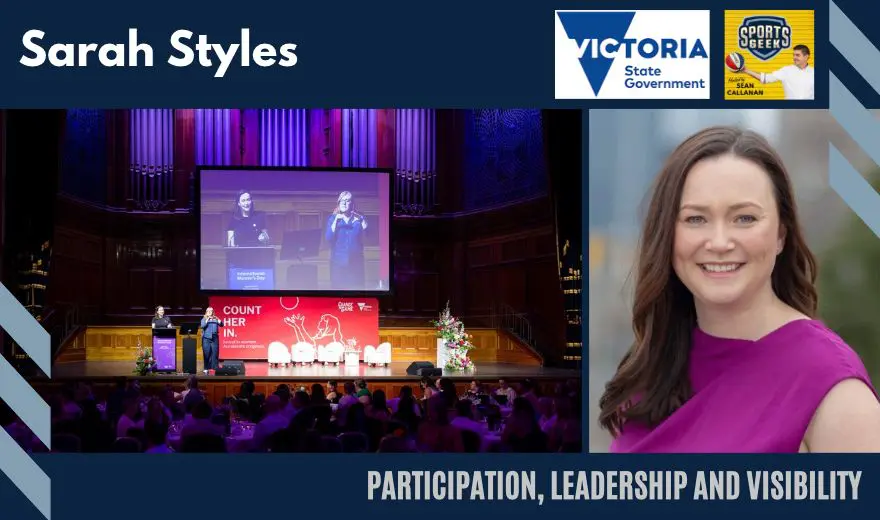
Listen to full episode with Sarah Styles